Type Ii Mi Vs Nstemi

Type 2 Myocardial Infarction The Chimaera Of Cardiology Heart
Sirens To Scrubs Acute Coronary Syndromes Part Three Diagnosis And Ed Management Canadiem

Acute Coronary Syndrome Amboss
60235-1.fp.png)
Role Of Delta Cardiac Troponin I To Distinguish Between Type I Nstemi And Type Ii Myocardial Infarction Journal Of The American College Of Cardiology

Type 2 Myocardial Infarction A Geriatric Population Based Model Of Pathogenesis

Acute Coronary Syndromes And Acute Heart Failure A Diagnostic Dilemma And High Risk Combination A Statement From The Acute Heart Failure Committee Of The Heart Failure Association Of The European Society Of Cardiology
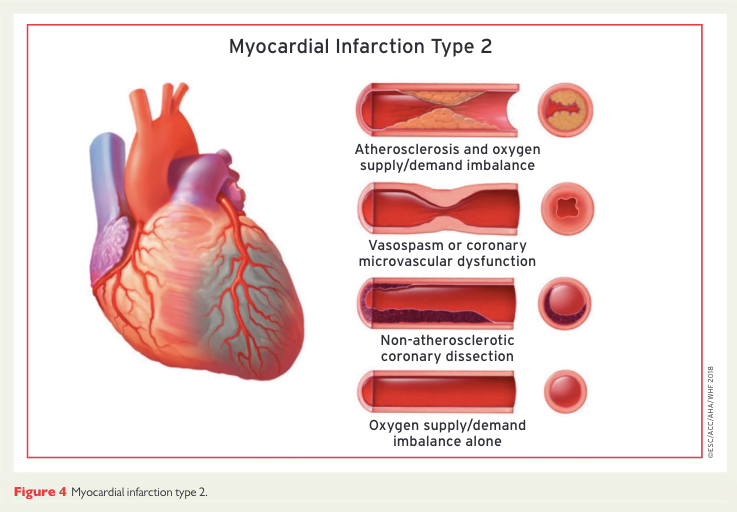
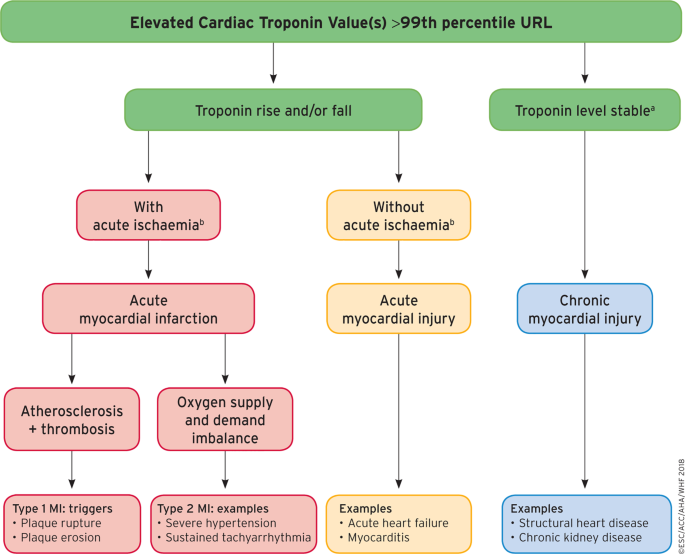
• Type 2 NonST elevation myocardial infarction (NSTEMI) is a common diagnosis in hospitalized patients Type 2 has been reported up to 25% of cases of MI depending on the population studied Type 2 NSTEMI is defined as myocardial ischemia resulting from mismatched myocardial oxygen supply and demand that is not related to unstable coronary artery disease (CAD) Table 1 Etiologies of Type 2 NSTEMI.

Type ii mi vs nstemi. Background TypeII MI is defined as myocardial infarction (MI) secondary to ischemia due to either increased oxygen demand or decreased supply This categorization has been used for the last five years, yet, little is known about patient characteristics and clinical outcomes In the current work we assessed the epidemiology, causes, management and outcomes of type II MI patients. Type 2 MI secondary to myocardial ischemia resulting from increased oxygen demand or decreased supply Authors developed specific clinical standards for the definition of type 2 MI Decreased supply Hemoglobin. It is wellestablished that patients with type 2 MI or nonischemic myocardial injury have a poor prognosis compared with patients with troponin concentrations less than the 99th percentile 7,8 In these patients, allcause mortality rates for hospitalized patients are high ~87% for type 2 MI and 106% for myocardial injury 5 Following discharge, 30day mortality rates are 44% for type 2 MI and 74% for myocardial injury.
Myocardial infarction type 2 (T2MI) has been a focus of attention;. More patients with type 2 MI presented with atypical symptoms of dyspnea (25% for type 2 vs 24% for type 1) and arrhythmia, and were more often diagnosed with nonSTelevation MI (NSTEMI) (700% for type 2 vs 441% for type 1) The type 2 MI cohort contained more diabetic patients than the type1 MI cohort (2918% vs 2561% respectively. There are limited prognostic data for type 1 vs type 2 NSTEMI;.
Background TypeII MI is defined as myocardial infarction (MI) secondary to ischemia due to either increased oxygen demand or decreased supply This categorization has been used for the last five years, yet, little is known about patient characteristics and clinical outcomes In the current work we assessed the epidemiology, causes, management and outcomes of type II MI patients. A condition called type 2 myocardial infarction (T2MI) As with any MI subtype, there must be clinical evidence of myocardial ischemia. Type 2 MI secondary to myocardial ischemia resulting from increased oxygen demand or decreased supply Authors developed specific clinical standards for the definition of type 2 MI Decreased supply Hemoglobin.
However, in a single‐center retrospective study of 1039 patients with NSTEMI, those with type 2 vs type 1 MI had significantly higher in‐hospital mortality (174% vs 47%), 30‐day mortality (119% vs 22%), and 1‐year mortality (349% vs 124%) In‐hospital mortality. 8 Bybee KA, Kara T, Prasad A, Lerman A, Barsness GW, Wright RS, et al Systematic review transient left ventricular apical ballooning a syndrome that mimics STsegment elevation myocardial infarction Ann Intern Med 04;141(11) 9 Apical ballooning syndrome (TakoTsubo or stress cardiomyopathy) a mimic of acute myocardial infarction. Myocardial infarction (MI) refers to tissue death of the heart muscle caused by ischaemia, that is lack of oxygen delivery to myocardial tissueIt is a type of acute coronary syndrome, which describes a sudden or shortterm change in symptoms related to blood flow to the heart Unlike the other type of acute coronary syndrome, unstable angina, a myocardial infarction occurs when there is cell.
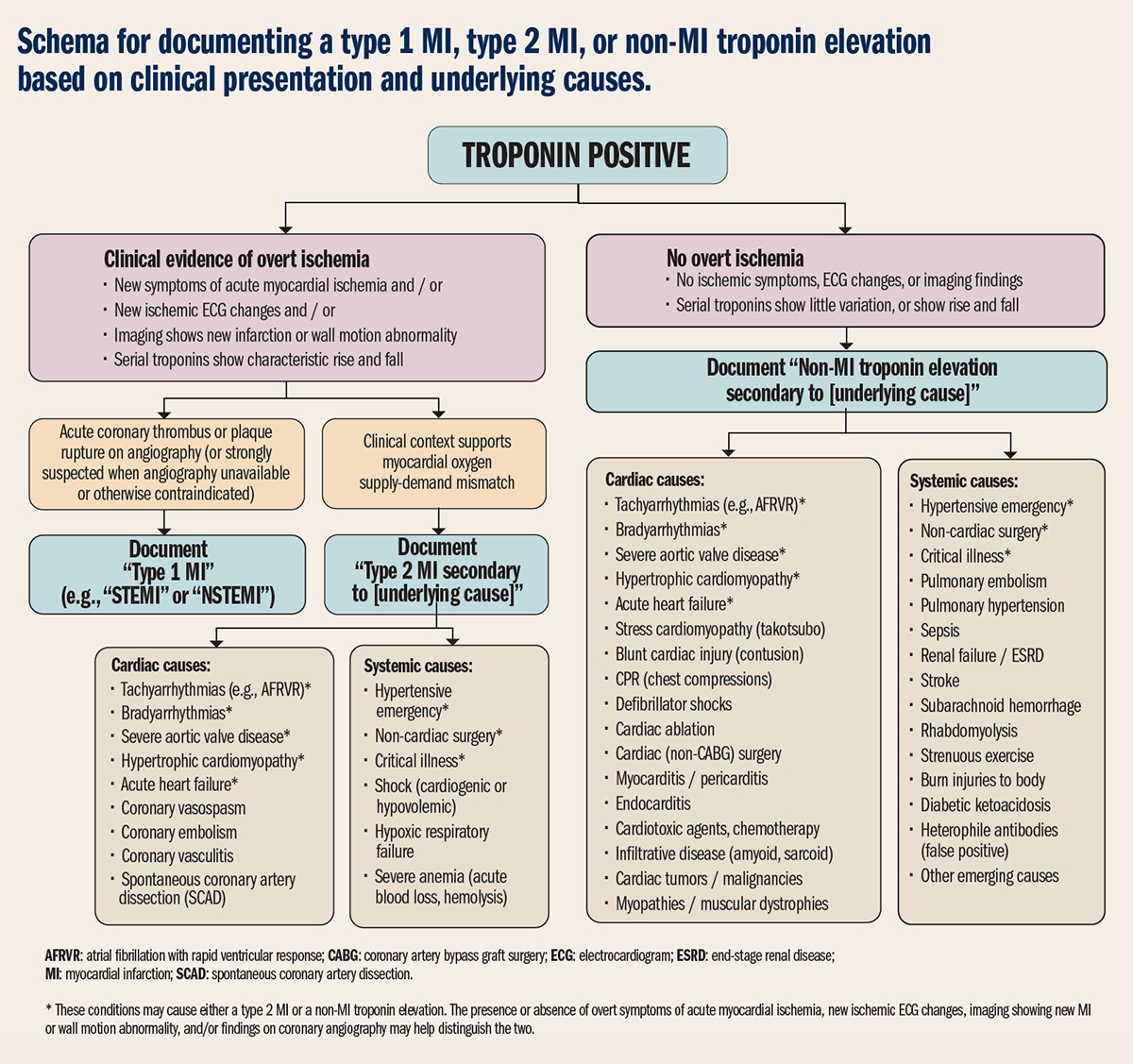
Type 1 MI (also referred to as spontaneous MI) is generally a primary reason (or “principal” diagnosis) for a patient’s presentation to a hospital 3 Please note that a very high or rising troponin level alone is not diagnostic for a type 1 or type 2 NSTEMI The lab has to be taken in the context of the patient’s presentation and other. There are limited prognostic data for type 1 vs type 2 NSTEMI;. The issue is inconsistency with the use of Type 2 MI A Type 2 MI is one that is secondary to ischemia due to either increased oxygen demand or decreased supply Your physician advisor is correct that if the wording Type 2 MI was used, an MI should be coded But we must remember the physician needs to identify the MI as either an NSTEMI or.
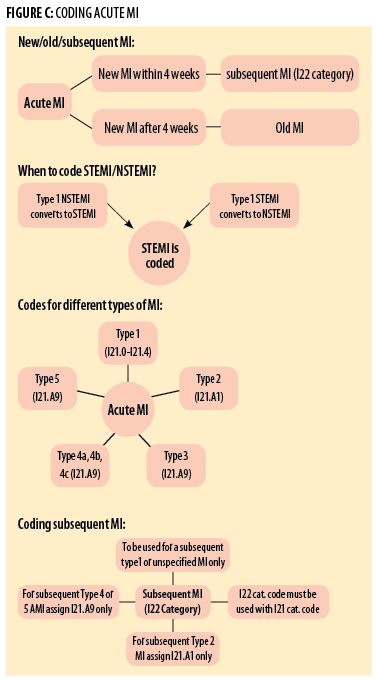
Prior to October 1, 17, type 2 MI was assigned the same code as NSTEMI, but now has its own separate code (I21A1) distinguishing it from NSTEMI Type 2 MI should not be identified as NSTEMI since the latter is due to CAD with thrombosis and improperly describes the patient's true condition and prognosis. A "Smart Tip" comes to my mind when looking up (MI) It says, "When it is the case that after study the acute myocarial infarction meets the definition of principal diagnosis and coronary atherosclerosis is also documented, sequence the acute myocardial infarction as the principal diagnosis with the additional code of coronary artery atherosclerosis. There are limited prognostic data for type 1 vs type 2 NSTEMI;.
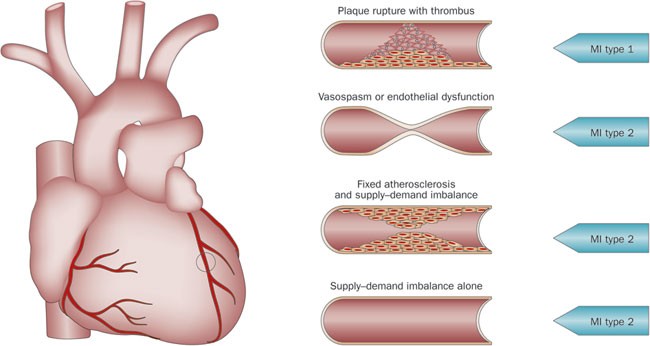
Type 1 MI (Infarction) is caused by atherosclerotic plaque rupture Type 2 MI is the "mismatch" due to an imbalance in myocardial oxygen supply and demand This can be the result of hypotension, tachycardia, sepsis, PE, etc Part 4 Prehospital care Prehospital ECGs decrease time to intervention (PCI) in STEMI. But you can’t have myocardial infarction without first having an imbalance in oxygen supply and demand. Background Type 2 myocardial infarction (MI) is defined by a rise and fall of cardiac biomarkers and evidence of ischemia without unstable coronary artery disease (CAD) because of a mismatch in myocardial oxygen supply and demand Myocardial injury is similar but does not fulfill the clinical criteria for MI There is uncertainty in terms of the clinical characteristics, management, and.
Now that a specific code exists for Type 2 MI (supply/demand infarction), it should not be described as NSTEMI, which is a Type 1 MI primarily due to CAD Incorrectly documenting NSTEMI rather than Type 2 results in many undesirable consequences for providers, patients, classification and data analysis Type 2 MI vs Demand Ischemia. Type 2 Myocardial infarction Type 2 MI is characterized by an imbalance between myocardial demand and myocardial oxygen supply These causes include vasospasm, coronary dissection, emboli, microvascular diseases and other causes leading to increased oxygen demand in the absence of coronary artery thrombus. Treatment for a Type 2 MI consists of treating the underlying cause/condition Once this is corrected the insult to the heart should improve/resolve Beginning FY18 on October 1, 17, a new code is available for MI Type 2 or MI due to demand ischemia I21A1, Myocardial infarction type 2.
Q If Type 2 myocardial infarction (MI) and demand ischemia are both documented, should I code only Type 2 MI based on the Excludes 1 note found in the Tabular List under demand ischemia?. Myocardial infarction type 2 (T2MI) has been a focus of attention;. However, in a single‐center retrospective study of 1039 patients with NSTEMI, those with type 2 vs type 1 MI had significantly higher in‐hospital mortality (174% vs 47%), 30‐day mortality (119% vs 22%), and 1‐year mortality (349% vs 124%) In‐hospital mortality.
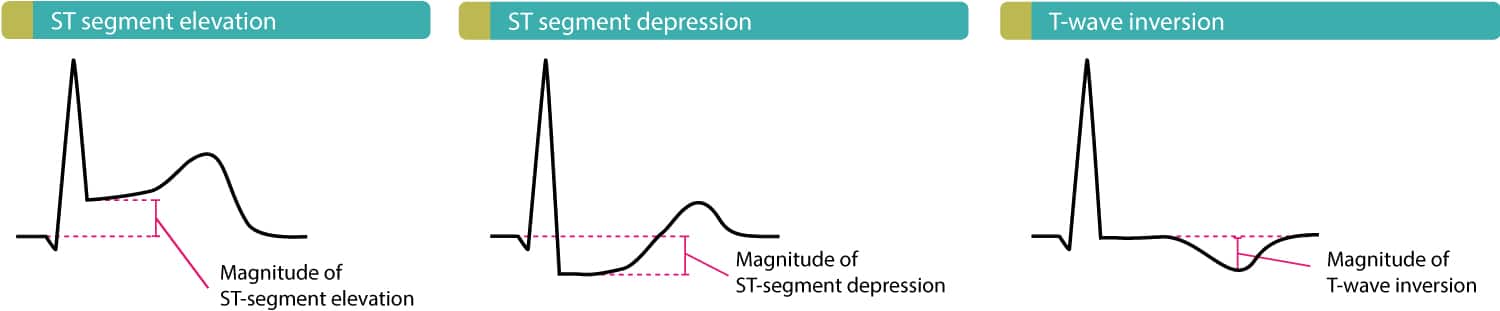
Whereas NSTEMI and STEMI do The names are selfexplanatory ST Elevated Myocardial Infarction = STEMI;. Conceptually T2MI occurs in a clinical setting with overt myocardial ischemia where a condition other than an acute atherothrombotic event is the major contributor to a significant imbalance between myocardial oxygen supply and/or demand. Troponin I or troponin T and CK will be elevated) without acute STsegment elevation ECG changes such as STsegment depression, Twave inversion, or both may be present.
It should be noted that the term NSTEMI should be used exclusively when documenting a Type 1 MI, and if the provider documents NSTEMI Type 2 then code I21A1 should be used, as the MI type takes precedence over NSTEMI The sequencing of Type 2 MI and its underlying cause is dependent on the circumstances of admission. Acute myocardial infarction (MI) can occur from increased myocardial oxygen demand and/or reduced supply in the absence of acute atherothrombotic plaque disruption;. NonST segment elevation myocardial infarction (NSTEMI) and STsegment elevation myocardial infarction (STEMI) are both commonly known as heart attack NSTEMI is the less common of the two, accounting for around 30 percent of all heart attacks.
Non–STsegment elevation myocardial infarction (NSTEMI, subendocardial MI) is myocardial necrosis (evidenced by cardiac markers in blood;. The Third Universal Definition of Myocardial Infarction has defined six Types of MI The two most commonly encountered are Type 1 (STEMI and NSTEMI) primarily due to CAD and Type 2 primarily due to a condition other than CAD Types 35 are much less common and describe unique circumstances primarily related to procedures. Treatment for a Type 2 MI consists of treating the underlying cause/condition Once this is corrected the insult to the heart should improve/resolve Beginning FY18 on October 1, 17, a new code is available for MI Type 2 or MI due to demand ischemia I21A1, Myocardial infarction type 2.
(2) clinical context lacking signs or symptoms suggestive of acute coronary syndrome or nonischemic contributors to myocardial injury (such as myocarditis);. Prior to October 1, 17, type 2 MI was assigned the same code as NSTEMI, but now has its own separate code (I21A1) distinguishing it from NSTEMI Type 2 MI should not be identified as NSTEMI since the latter is due to CAD with thrombosis and improperly describes the patient's true condition and prognosis. For example, a physician recently documented that a patient had elevated troponin, likely a Type 2 MI/demand ischemia in the setting of a hypertensive emergency.
TypeII MI (demand ischemia) Myocardial infarction not involving unstable coronary plaque This is usually due to stable coronary stenoses in the context of physiologic stress (eg anemia, hypoxemia, inotropes, tachycardia) However, TypeII MI can also occur in the setting of normal coronaries due to severe stress (eg sustained. However, in a single‐center retrospective study of 1039 patients with NSTEMI, those with type 2 vs type 1 MI had significantly higher in‐hospital mortality (174% vs 47%), 30‐day mortality (119% vs 22%), and 1‐year mortality (349% vs 124%) In‐hospital mortality. A key consideration is comparing the severity of physiologic stress vs the severity of myocardial ischemia For example, if you give someone 500 mcg of subcutaneous epinephrine and they develop transient chest pain and a troponin of 07 ng/ml, that's probably a type2 MI.
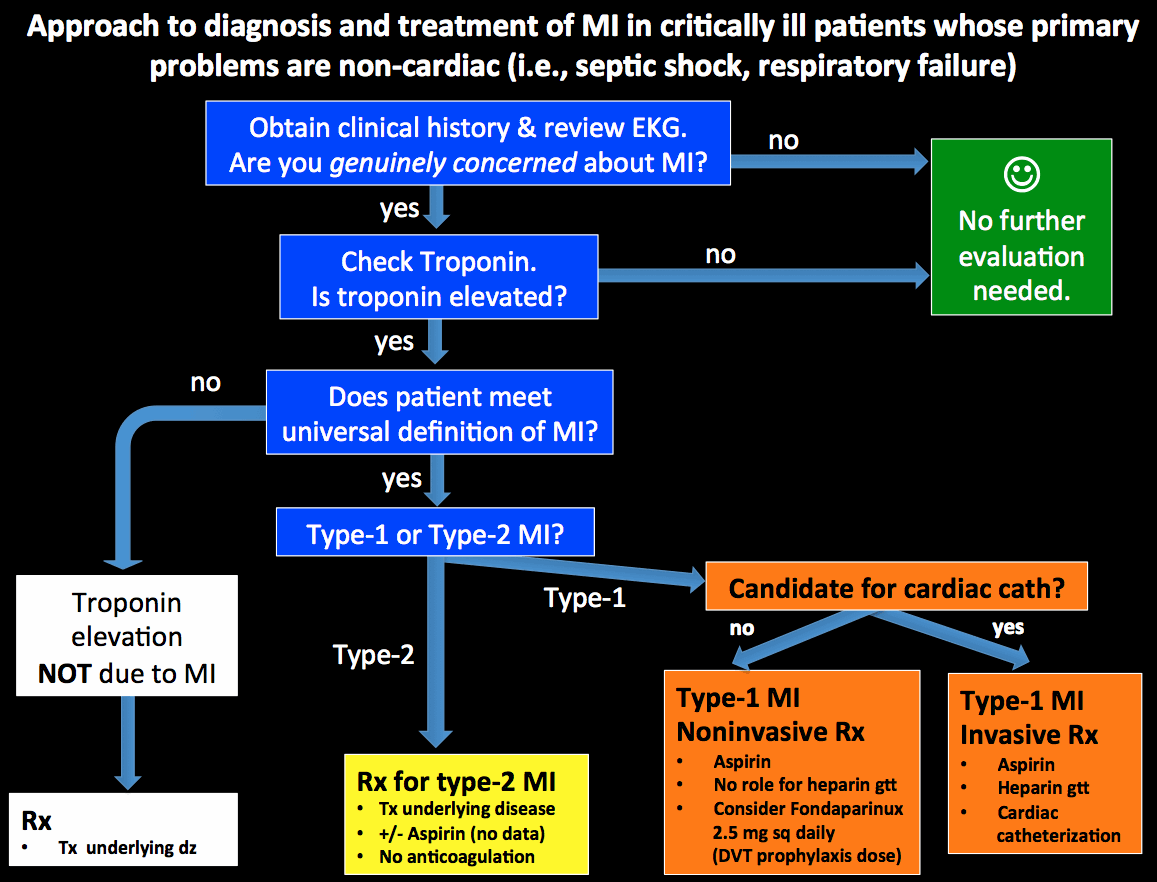
A "Smart Tip" comes to my mind when looking up (MI) It says, "When it is the case that after study the acute myocarial infarction meets the definition of principal diagnosis and coronary atherosclerosis is also documented, sequence the acute myocardial infarction as the principal diagnosis with the additional code of coronary artery atherosclerosis. Overview NSTEMI stands for nonST segment elevation myocardial infarction, which is a type of heart attack Compared to the more common type of heart attack known as STEMI, an NSTEMI is typically. Document that core measures are not indicated for Type 2 MI Treat the underlying condition eg, Troponins consistent with Type 2 MI due to hypertensive emergency If the patient has EKG changes or known CAD, it may be appropriate to diagnose NSTEMI or STEMI instead of Type 2 MI If you do so, be sure to attend to core measures.
Type 2 The infarction is related to ischemia, the cause of the ischemia being, for example, coronary embolism or anemia Type 3 The symptoms preceding cardiac death or an autopsy point to myocardial ischemia Type 4a The myocardial infarction occurs as part of a PCI Type 4b The myocardial infarction is caused by stent thrombosis. It should be noted that the term NSTEMI should be used exclusively when documenting a Type 1 MI, and if the provider documents NSTEMI Type 2 then code I21A1 should be used, as the MI type takes precedence over NSTEMI The sequencing of Type 2 MI and its underlying cause is dependent on the circumstances of admission. The key difference is that angina does not result in the death of myocardial tissue;.
Background The 14 AHA guidelines for the management of NSTEMI, recommend unfractionated heparin with an initial loading dose of 60IU/KG (maximum 4,000 IU) with an initial infusion of 12 IU/kg/hr (maximum 1,000 IU/hr) adjusted per active partial thromboplastin time to maintain therapeutic anticoagulation according to the specific hospital protocol, continued for 48 hours or until PCI is. Myocardial Infarction (MI) Quick Reference The ICD‐10‐CM codes for acute myocardial infarction are located in chapter 9, Diseases of the Circulatory System, and are coded by site (such as anterolateral wall or true posterior wall), type (STEMI or NSTEMI) and. Type 2 MI describes an MI due to supply/demand mismatch, without plaque rupture, but also with myocardial necrosis evidenced by a rise of cardiac biomarkers in addition to at least one other criteria for MI Providers use this term inconsistently, some meaning a myocardial infarction did occur, others to indicate an episode of demand ischemia.
NonST segment elevation myocardial infarction or heart attack (NSTEMI) ST segment elevation myocardial infarction or heart attack (STEMI) The location of the blockage, the length of time that blood flow is blocked and the amount of damage that occurs determines the type of acute coronary syndrome. Type 2 The infarction is related to ischemia, the cause of the ischemia being, for example, coronary embolism or anemia Type 3 The symptoms preceding cardiac death or an autopsy point to myocardial ischemia Type 4a The myocardial infarction occurs as part of a PCI Type 4b The myocardial infarction is caused by stent thrombosis. Conceptually T2MI occurs in a clinical setting with overt myocardial ischemia where a condition other than an acute atherothrombotic event is the major contributor to a significant imbalance between myocardial oxygen supply and/or demand.
Patients with type 2 MI are frequently encountered in clinical practice Diagnostic criteria for type 2 MI include the following (1) detection of markers of cardiac myonecrosis (ie, elevated troponin concentrations);.
Q Tbn And9gctnpowettmeilkqvdgdpxw6pqvx0dk4ycxdudhsgpaln7rcr4bp Usqp Cau
Feature Translating The Fourth Universal Definition Of Myocardial Infarction Into Clinical Documentation Ten Pearls For Frontline Clinicians American College Of Cardiology

Abstract Long Term Mortality Is Significantly Higher In Patients With Type Ii Compared With Type I Myocardial Infarction A Propensity Matched Analysis Circulation

Assessment And Classification Of Patients With Myocardial Injury And Infarction In Clinical Practice Heart
Www Ahajournals Org Doi Pdf 10 1161 Jaha 118 Download True

Hypothesized Role Of The Pdi In Distinguishing Type 1 And Type 2 Mi Download Scientific Diagram
Myocardial Ischaemia Litfl Ecg Library Diagnosis

Troponin And Other Diagnostic Tests Rob Siegel Md Jacobi Cardiology Ppt Download

Misdiagnosis Of Type Ii Myocardial Infarction Journal Of The American College Of Cardiology

Acute Coronary Syndrome Main Wikem
Type Ii Myocardial Infarction Patient Characteristics Management And Outcomes
Q Tbn And9gcqutrvywshni Gpte1jwk Gh7ksilq3nih95wk2tdgrmtb2wuxf Usqp Cau

Type 2 Versus Type 1 Myocardial Infarction A Comparison Of Clinical Characteristics And Outcomes With A Meta Analysis Of Observational Studies Gupta Cardiovascular Diagnosis And Therapy

Type 2 Versus Type 1 Myocardial Infarction A Comparison Of Clinical Characteristics And Outcomes With A Meta Analysis Of Observational Studies Gupta Cardiovascular Diagnosis And Therapy

Pdf Type 2 Versus Type 1 Myocardial Infarction A Comparison Of Clinical Characteristics And Outcomes With A Meta Analysis Of Observational Studies
Myocardial Ischaemia Litfl Ecg Library Diagnosis

Type 2 Myocardial Infarction Jacc Review Topic Of The Week Sciencedirect

Assessment And Treatment Of Patients With Type 2 Myocardial Infarction And Acute Nonischemic Myocardial Injury Circulation

Pulmcrit Acute Infection Myocardial Infarction How Afraid Should We Be

Fourth Universal Definition Of Myocardial Infarction 18 Circulation
Invasive Versus Non Invasive Management Of Older Patients With Non St Elevation Myocardial Infarction Senior Nstemi A Cohort Study Based On Routine Clinical Data The Lancet

Defining And Managing Patients With Non St Elevation Myocardial Infarction Sorting Through Type 1 Vs Other Types Cohen Clinical Cardiology Wiley Online Library
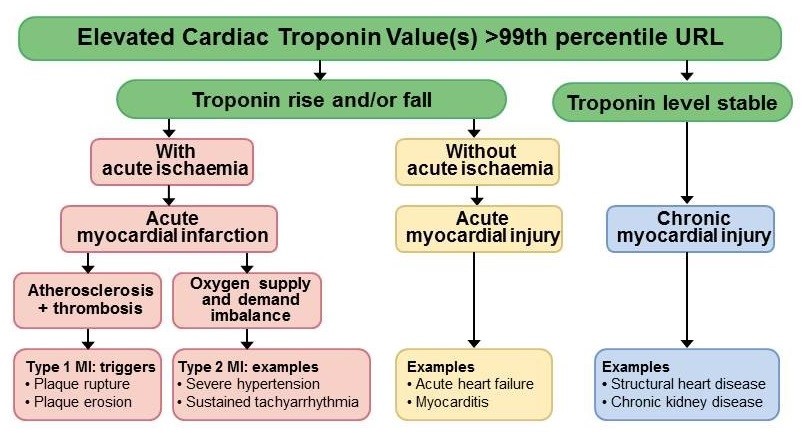
Fourth Universal Definition Of Myocardial Infarction What S New American College Of Cardiology
Type Ii Myocardial Infarction Patient Characteristics Management And Outcomes
/non-st-segment-elevation-myocardial-infarction-nstemi-1746017_FINAL-5c1abac4c9e77c00016ac74c.png)
Nstemi Non St Segment Myocardial Infarction Explained

The Universal Definition Of Mi And Type 2 Mi Youtube

Accuracy Of Physicians In Differentiating Type 1 And Type 2 Myocardial Infarction Based On Clinical Information Cjc Open
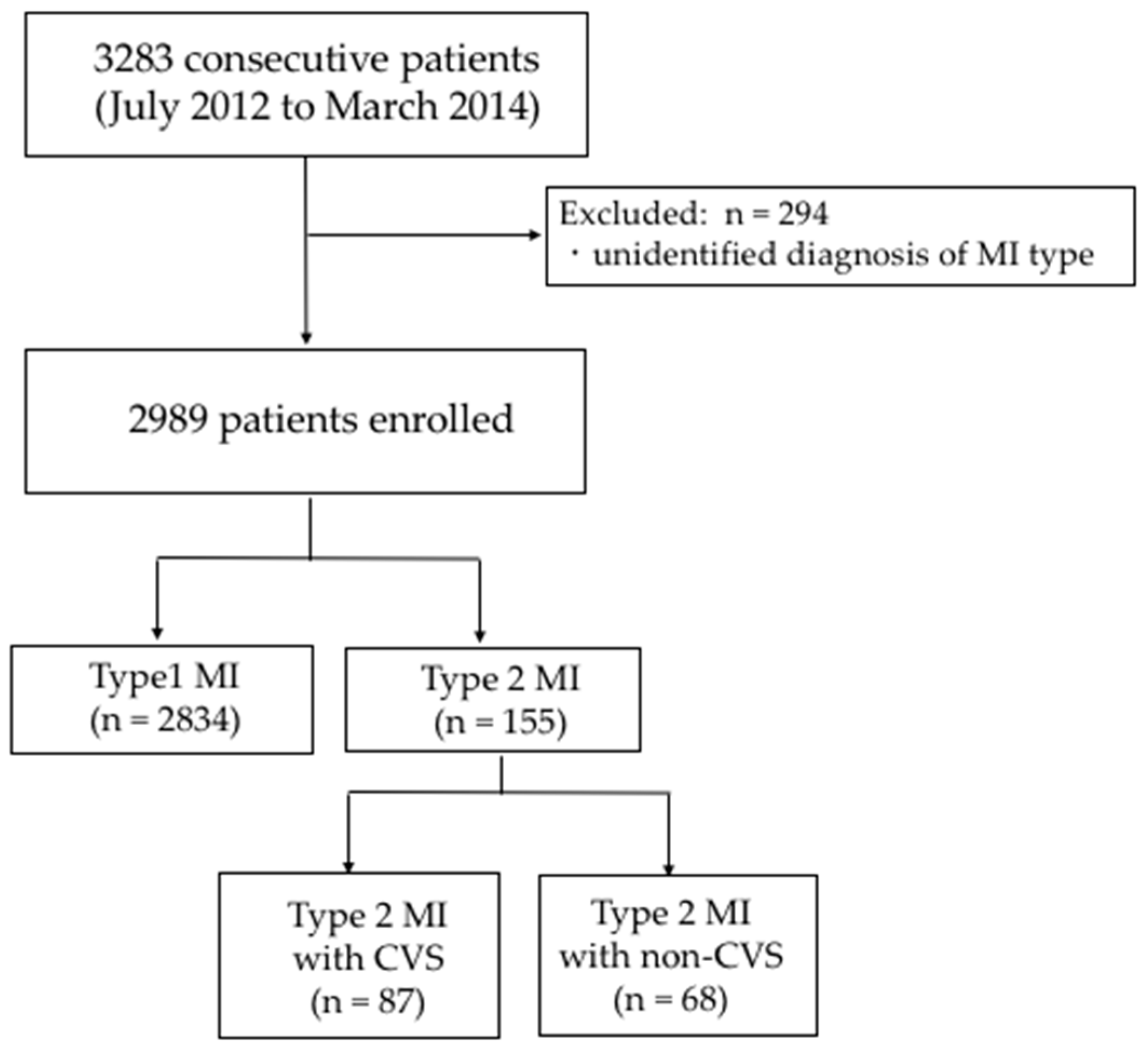
Jcm Free Full Text Long Term Prognosis Of Patients With Myocardial Infarction Type 1 And Type 2 With And Without Involvement Of Coronary Vasospasm Html

Cardiac Troponins And Mortality In Type 1 And 2 Myocardial Infarction In Clinical Chemistry And Laboratory Medicine Cclm Volume 55 Issue 2 17
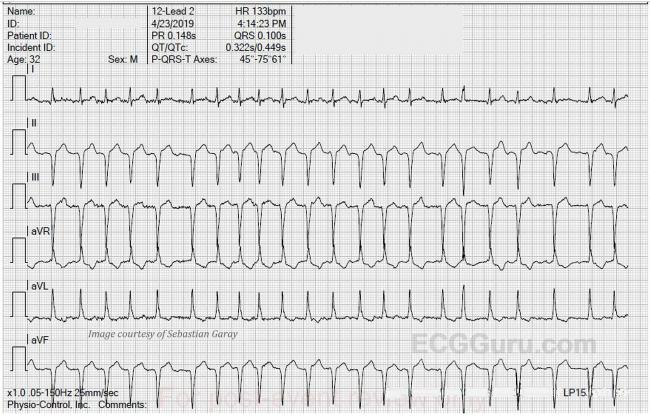
Atrial Fibrillation And Type 2 M I Ecg Guru Instructor Resources
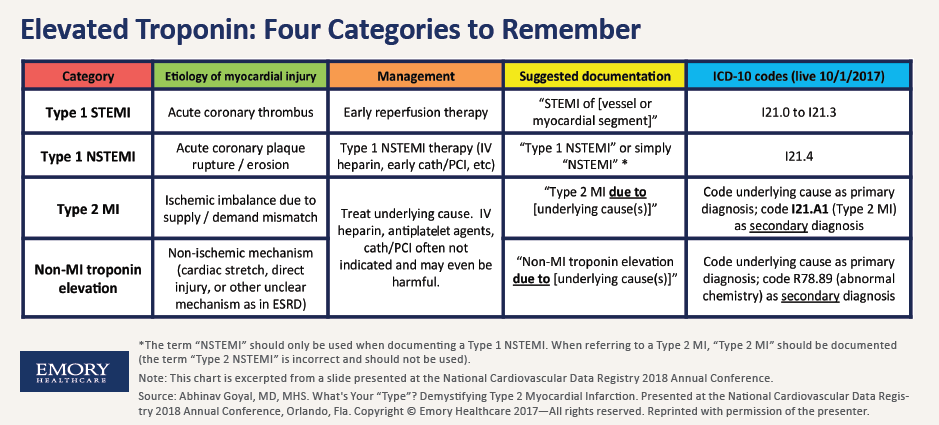
Definitions Documentation The Dangers Of Mislabeling Is A Heart Attack Always A Heart Attack

Emdocs Net Emergency Medicine Educationnstemi Mimics A Review Of Critical Pitfalls In Diagnosis Emdocs Net Emergency Medicine Education
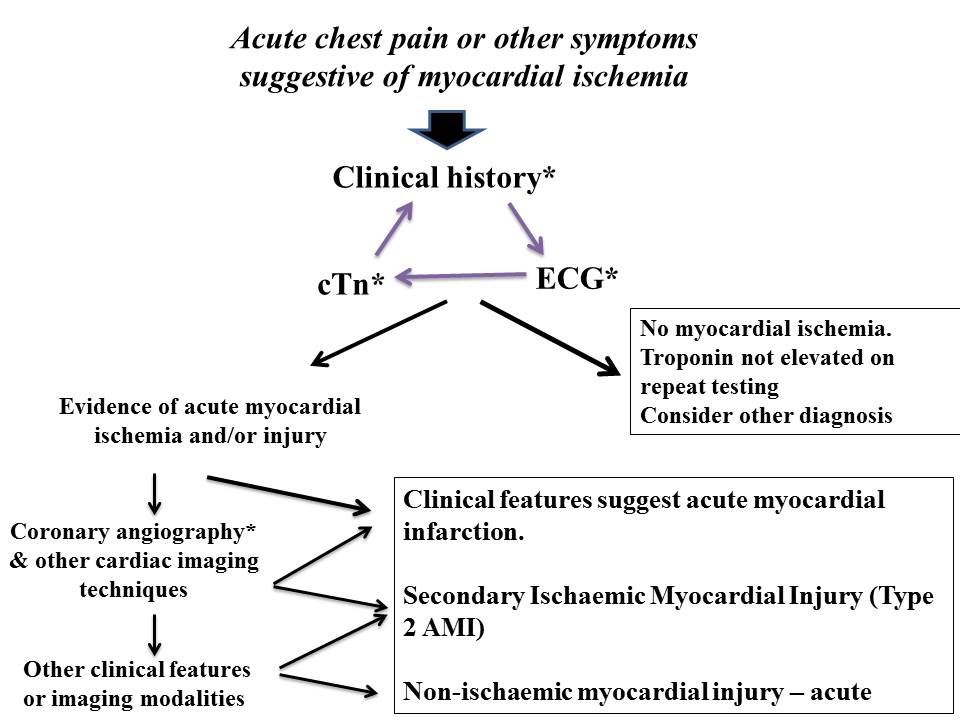
Diagnosing Type 2 Myocardial Infarction American College Of Cardiology

Type 2 Versus Type 1 Myocardial Infarction A Comparison Of Clinical Characteristics And Outcomes With A Meta Analysis Of Observational Studies Gupta Cardiovascular Diagnosis And Therapy

12 18 Core Series Acs Demystified Mostly Penn Internal Medicine Blog

Recent Advances In The Diagnosis And Treatment Of Acute Myocardial Infarction Abstract Europe Pmc

Pdf Type Ii Myocardial Infarction Patient Characteristics Management And Outcomes

Coronavirus Disease 19 Covid 19 Myocardial Infarction And Other Coronary Artery Disease Issues Uptodate

Type 2 Myocardial Infarction Jacc Review Topic Of The Week Sciencedirect

Assessment And Treatment Of Patients With Type 2 Myocardial Infarction And Acute Nonischemic Myocardial Injury Circulation

Impact Of Type 2 Myocardial Infarction Mi On Hospital Level Mi Outcomes Implications For Quality And Public Reporting Journal Of The American Heart Association
Www Journalajcrmh Com Index Php Ajcrmh Article Download

Republished Clinical Implications Of The Third Universal Definition Of Myocardial Infarction Postgraduate Medical Journal

Type 2 Versus Type 1 Myocardial Infarction A Comparison Of Clinical Characteristics And Outcomes With A Meta Analysis Of Observational Studies Gupta Cardiovascular Diagnosis And Therapy
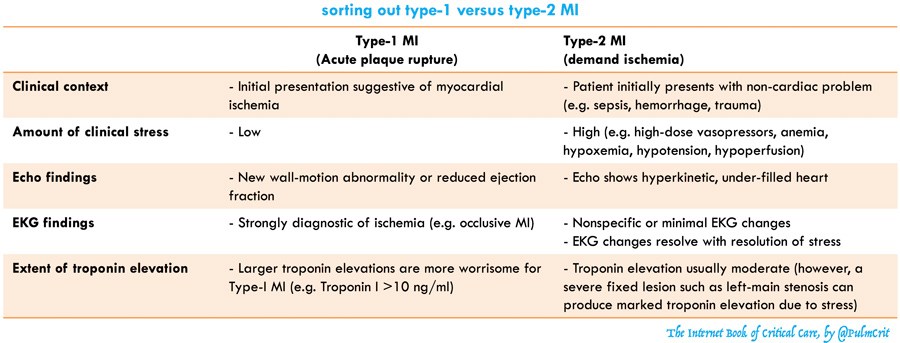
Differentiating Type I Vs Type Ii Mi Sorting This Grepmed
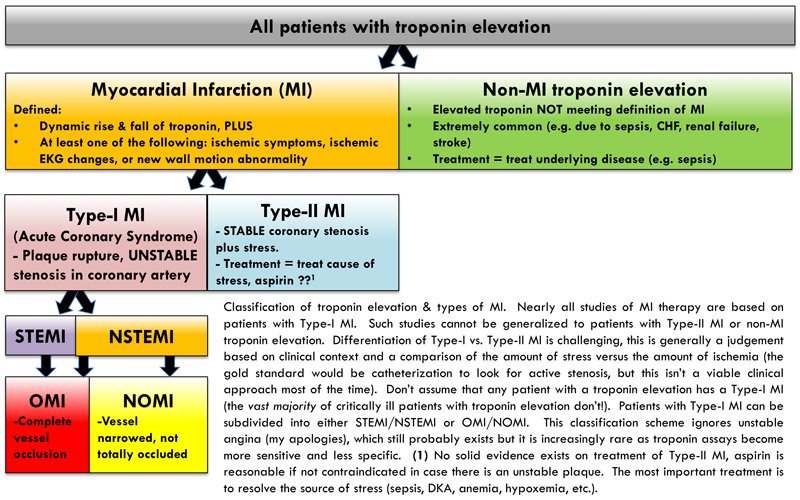
𝙟𝙤𝙨𝙝 𝙛𝙖𝙧𝙠𝙖𝙨 Received Some Questions About Reconciling Omi Nomi With Type I Type Ii Mi Here Is My View Of How All This Fits Together More On Omi Nomi T Co 02gm7lkbqb More On Type 1 2 T Co Kjx7uc7knq

Type 2 Versus Type 1 Myocardial Infarction A Comparison Of Clinical Characteristics And Outcomes With A Meta Analysis Of Observational Studies Gupta Cardiovascular Diagnosis And Therapy

Type 1 Vs Type 2 Myocardial Infarction Myocardial Infarction Type 1 Plaque

Troponin Elevation In Non Cardiac Critical Illness Emcrit Project

Myocardial Infarction Cardiovascular Medbullets Step 1

Type 2 Versus Type 1 Myocardial Infarction A Comparison Of Clinical Characteristics And Outcomes With A Meta Analysis Of Observational Studies Abstract Europe Pmc
Www Ahajournals Org Doi Pdf 10 1161 Jaha 118 Download True
Plos One Type Ii Myocardial Infarction Patient Characteristics Management And Outcomes

Nstemi The Latest Evidence In Emergency Department Management
Www Ahajournals Org Doi Pdf 10 1161 Jaha 118 Download True

Framework For Type 2 Myocardial Infarction Considering The Clinical Download Scientific Diagram

Type 2 Myocardial Infarction A Geriatric Population Based Model Of Pathogenesis

Acute Coronary Syndrome Update Ppt Video Online Download

Nstemi The Latest Evidence In Emergency Department Management

Accuracy Of Physicians In Differentiating Type 1 And Type 2 Myocardial Infarction Based On Clinical Information Cjc Open

Type 2 Versus Type 1 Myocardial Infarction A Comparison Of Clinical Characteristics And Outcomes With A Meta Analysis Of Observational Studies Gupta Cardiovascular Diagnosis And Therapy
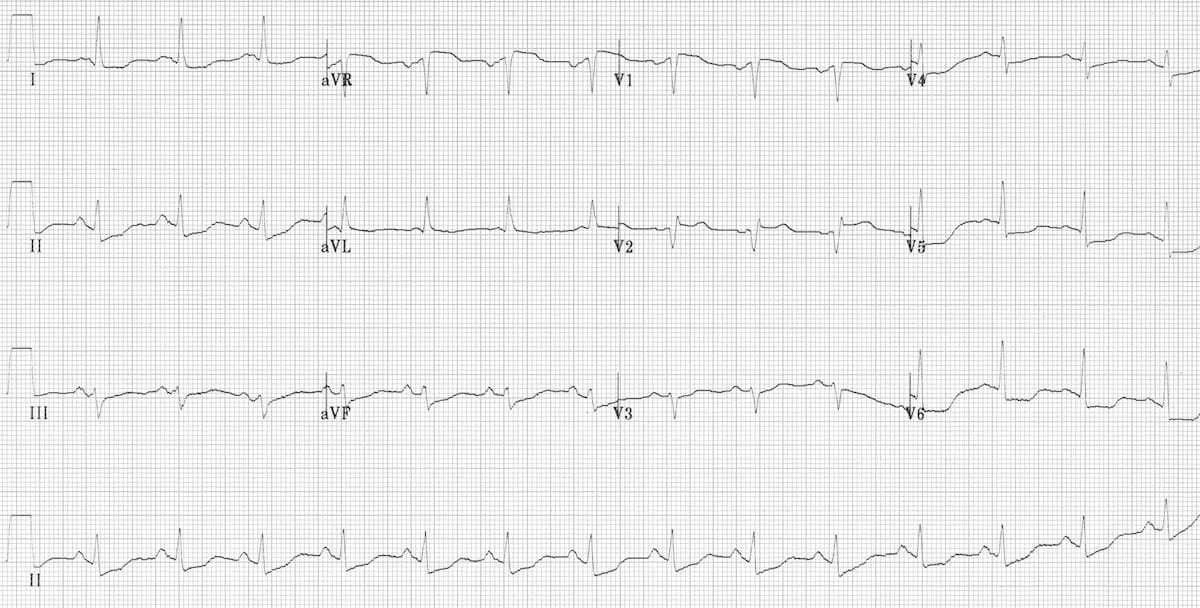
Myocardial Ischaemia Litfl Ecg Library Diagnosis

Type 2 Myocardial Infarction Jacc Review Topic Of The Week Journal Of The American College Of Cardiology

Assessment And Treatment Of Patients With Type 2 Myocardial Infarction And Acute Nonischemic Myocardial Injury Circulation

Pulmcrit Acute Infection Myocardial Infarction How Afraid Should We Be

Pdf Type Ii Myocardial Infarction Patient Characteristics Management And Outcomes
Classification Of Acute Coronary Syndromes Acs Acute Myocardial Infarction Ami Ecg Echo
Third Universal Definition Of Myocardial Infarction Nature Reviews Cardiology
Jcm Free Full Text The Multifaceted Interplay Between Atrial Fibrillation And Myocardial Infarction A Review Html

Meta Analysis Comparing Outcomes Of Type 2 Myocardial Infarction And Type 1 Myocardial Infarction With A Focus On Dual Antiplatelet Therapy Sciencedirect

Type 2 Myocardial Infarction Jacc Review Topic Of The Week Sciencedirect
Avoiding Over Diagnosis And Over Treatment Of Mi In Critically Ill Patients

Myocardial Infarction Wikipedia

Type 2 Myocardial Infarction Jacc Review Topic Of The Week Sciencedirect

Pulmcrit Acute Infection Myocardial Infarction How Afraid Should We Be
Acute St Elevation Myocardial Infarction Article
Don T Miss A Beat When Coding Myocardial Infarction pc Knowledge Center
Atrial Fibrillation And Type 2 M I Ecg Guru Instructor Resources

Myocardial Ischaemia Litfl Ecg Library Diagnosis

Type 2 Myocardial Infarction Jacc Review Topic Of The Week Sciencedirect
Q Tbn And9gctcpr5c6k67xe8i1epj P19hn2dirrstmh1oy5d52b6wzrfdumm Usqp Cau
Emdocs Net Emergency Medicine Educationnstemi Mimics A Review Of Critical Pitfalls In Diagnosis Emdocs Net Emergency Medicine Education
Q Tbn And9gcsbudl Zgevtpmjeprrjgn0cgludz7sjvsw5qvv7ywumgsnmqrw Usqp Cau

Impact Of Type 2 Myocardial Infarction Mi On Hospital Level Mi Outcomes Implications For Quality And Public Reporting Journal Of The American Heart Association
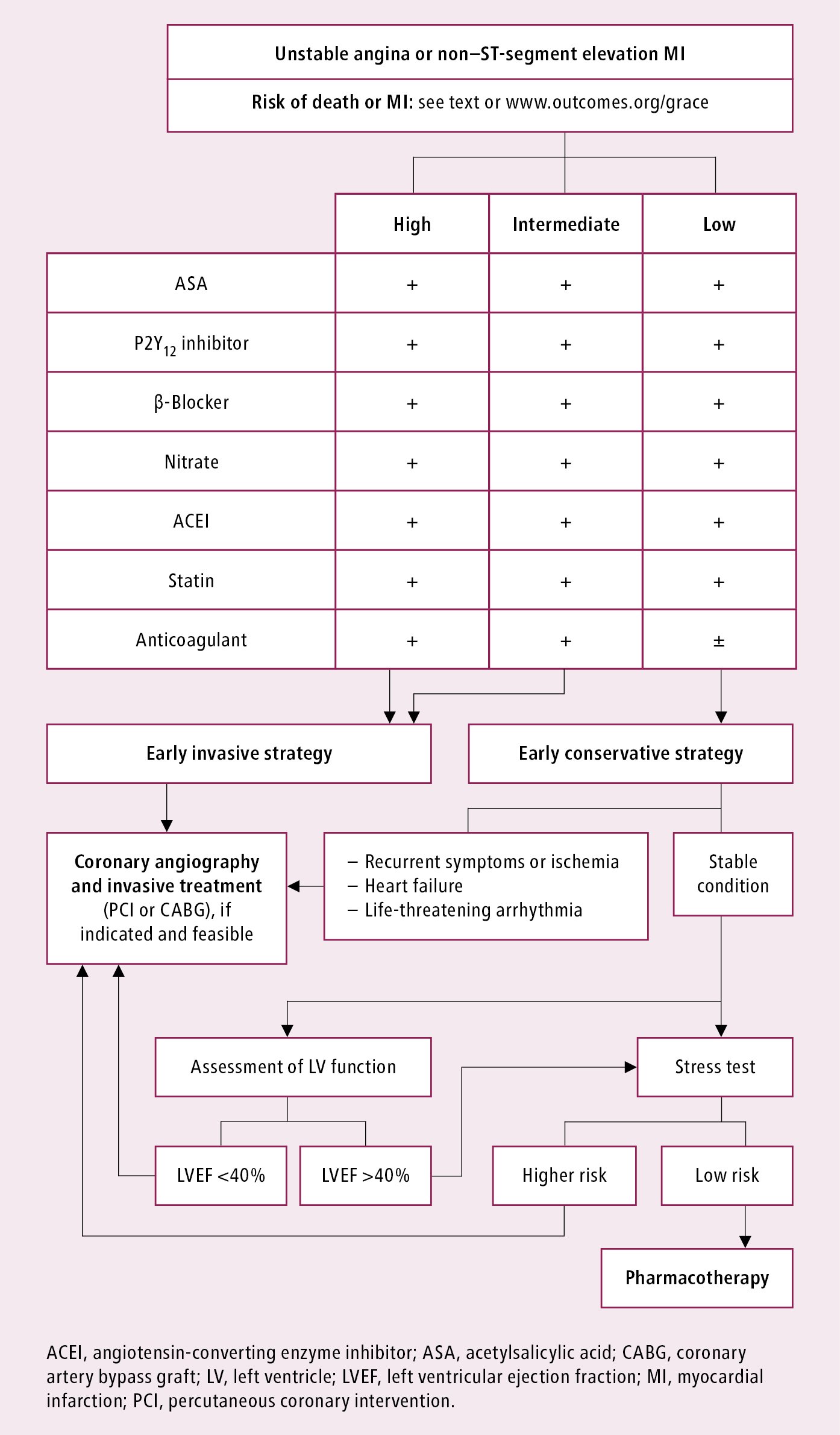
Non St Segment Elevation Myocardial Infarction Nstemi And Unstable Angina Ua Acute Coronary Syndrome Acs Ischemic Heart Disease Ihd Cardiovascular Diseases Diseases Mcmaster Textbook Of Internal Medicine
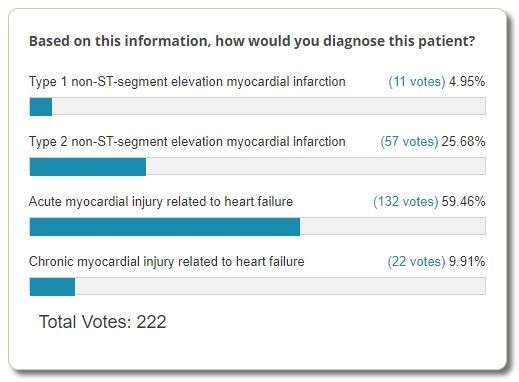
Poll Results Nstemi Vs Myocardial Injury American College Of Cardiology

Myocardial Infarction Coding Is Good For The Heart 3m Inside Angle

Jcm Free Full Text Cardiac Biomarkers In The Emergency Department The Role Of Soluble St2 Sst2 In Acute Heart Failure And Acute Coronary Syndrome There Is Meat On The Bone Html
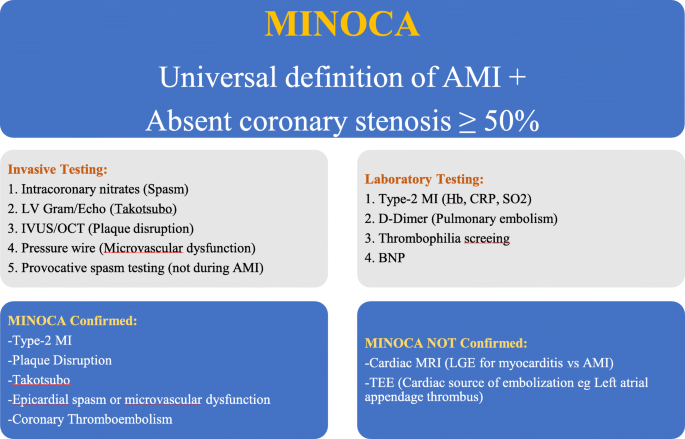
The Role Of Imaging For Minoca Myocardial Infarction With No Obstructive Coronary Artery Disease A Review Of Literature And Current Perspectives Springerlink
Acdis Org Sites Acdis Files Type ii mi Kc Pdf

Meta Analysis Comparing Outcomes Of Type 2 Myocardial Infarction And Type 1 Myocardial Infarction With A Focus On Dual Antiplatelet Therapy Sciencedirect
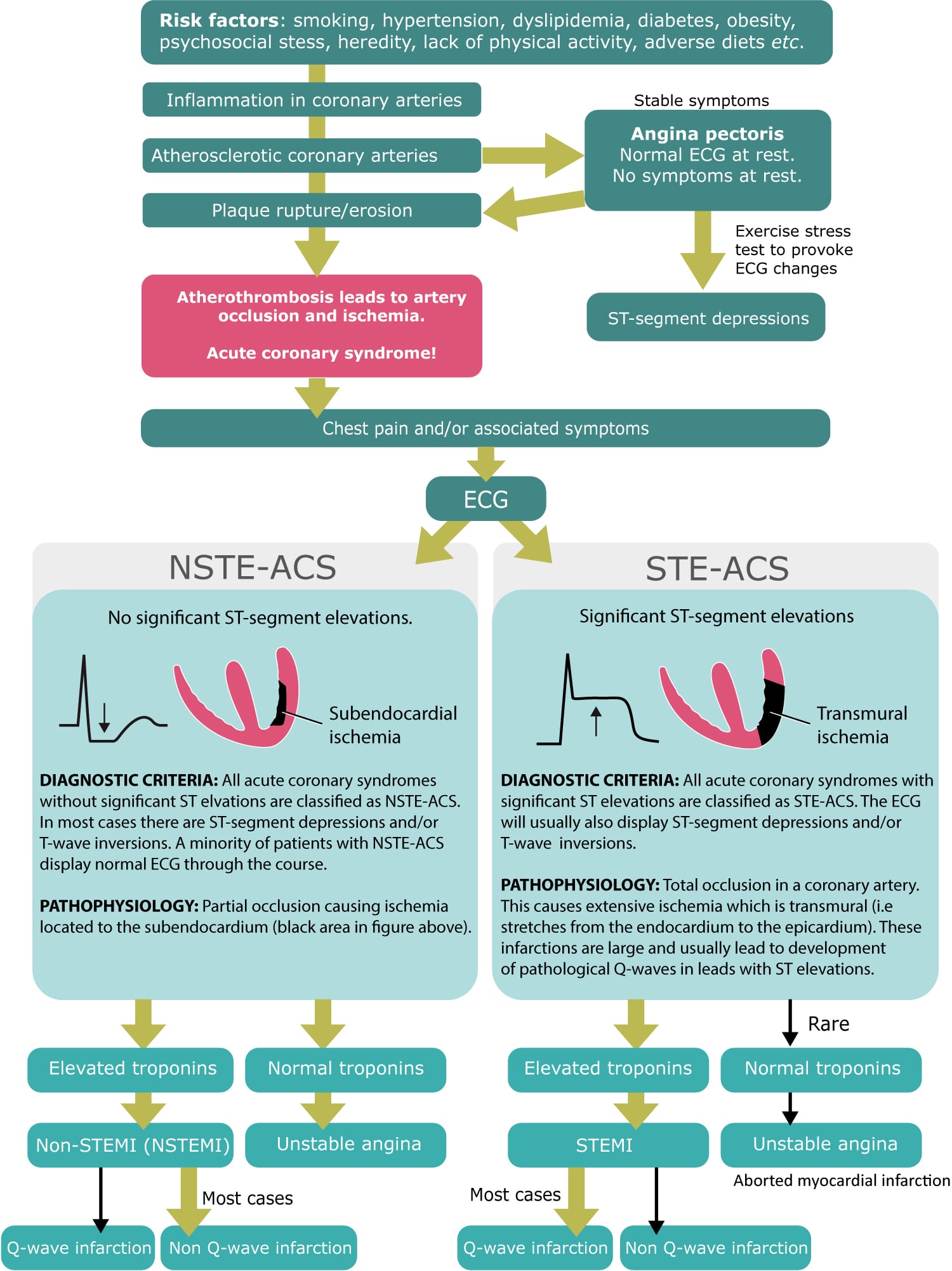
Classification Of Acute Coronary Syndromes Acs Acute Myocardial Infarction Ami Ecg Echo

Defining And Managing Patients With Non St Elevation Myocardial Infarction Sorting Through Type 1 Vs Other Types Cohen Clinical Cardiology Wiley Online Library

Defining And Managing Patients With Non St Elevation Myocardial Infarction Sorting Through Type 1 Vs Other Types Cohen Clinical Cardiology Wiley Online Library
Nstemi Treatment Should We Always Follow The Guidelines Springerlink

Comparison Of The St Elevation Myocardial Infarction Stemi Vs Nstemi And Occlusion Mi Omi Vs Nomi Paradigms Of Acute Mi Journal Of Emergency Medicine

Pdf Impact Of Type 2 Myocardial Infarction Mi On Hospital Level Mi Outcomes Implications For Quality And Public Reporting
Acdis Org Sites Acdis Files Type ii mi Kc Pdf


