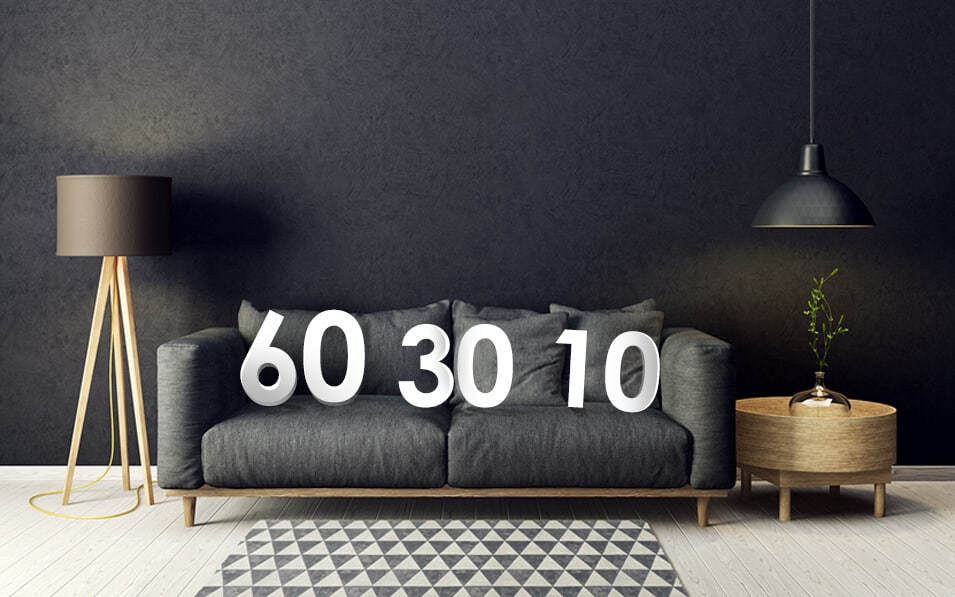
60 30 10 Color Rule Interior Design

Balancing Your Colour Scheme With The 60 30 10 Rule Smartstyle Interiors

5 Color Rules Every Interior Decorating Fan Should Know Decor Tips
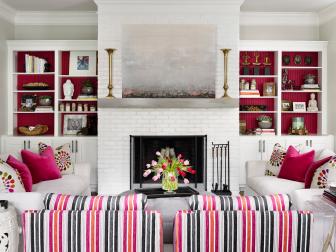
Top 10 Tips For Adding Color To Your Space Hgtv

The 60 30 10 Color Rule By Joanne Gaylord Issuu

Case Study 60 30 10 Rule Si Decor

Pin By Kate Ryder On 60 30 10 Colour Rule Paintright Colac Living Room Grey Living Room Designs Living Room Inspiration
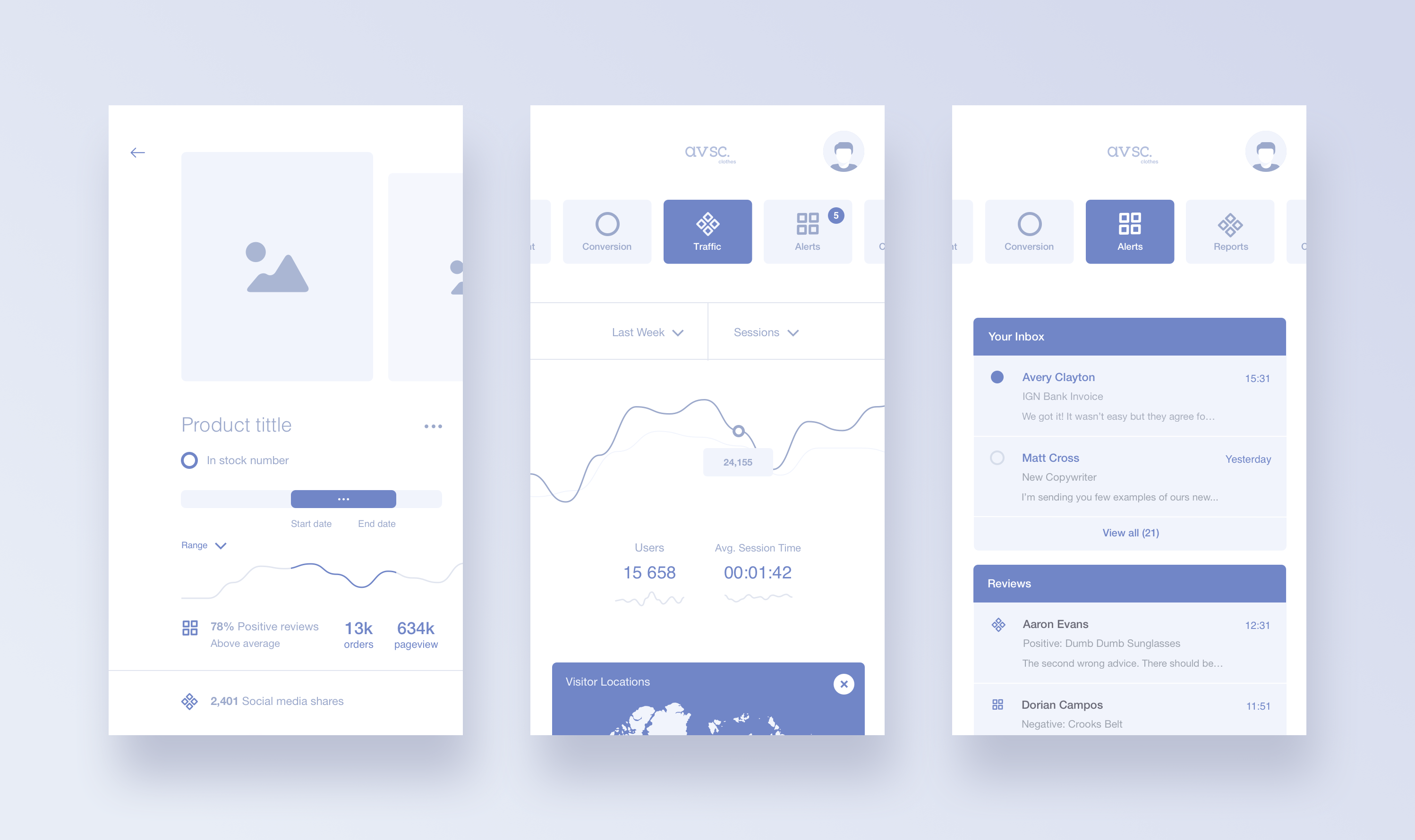
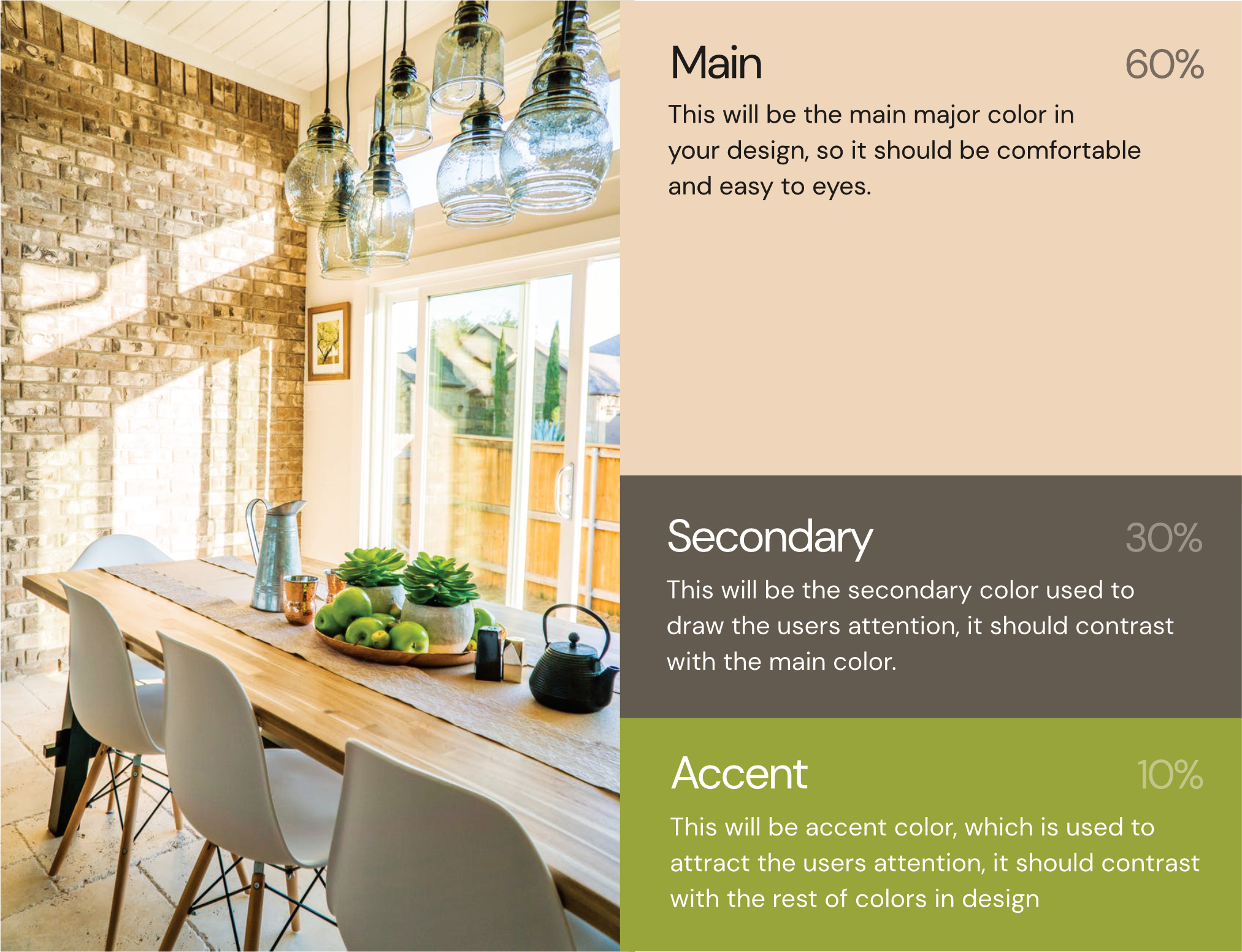
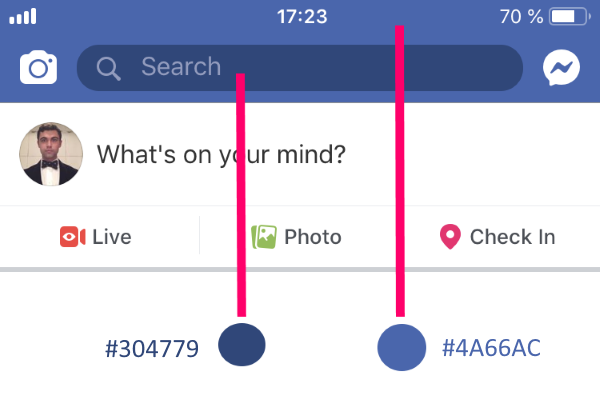
The c oncept I will be sharing is the 60–30–10 rule and how as a beginner you can use it for color application in your app design This cool color palette was chosen by Adedamilola The App was an “Exam Studying App” and to explain the rule to Adedamola I selected the “Course Information” screen shown below.
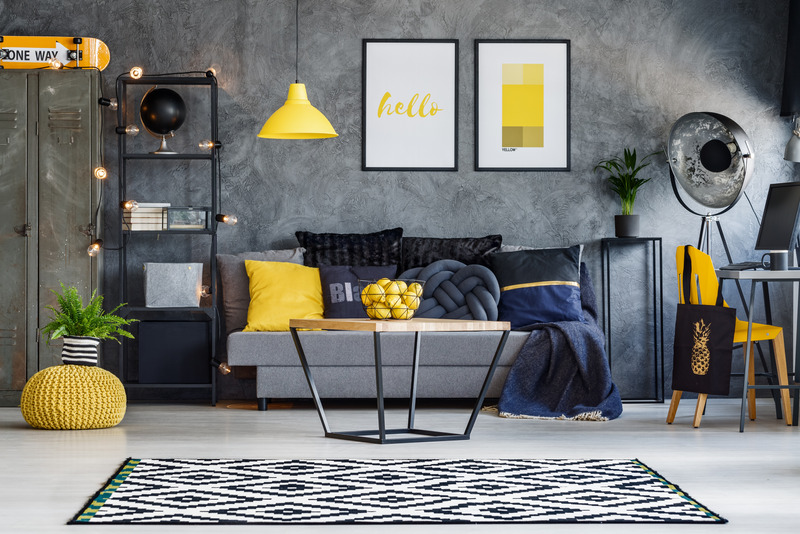
60 30 10 color rule interior design. Interior designers have further broken down the 40 percent part of the ratio to create the 60/30/10 rule which can be applied to the relationship between any 3 elements in a room – including the scale of the kitchen cabinets and the colors used to provide a balanced look to your kitchen design. 60% Is The Main Color Choose the main color, which will take at least half of the interior decor The easiest way is to use the main color on the walls It is better if it is neutral, so as not to make a mistake However, if you feel like bright colors – use them but keep all the rest in neutral tones. What is the Rule?.
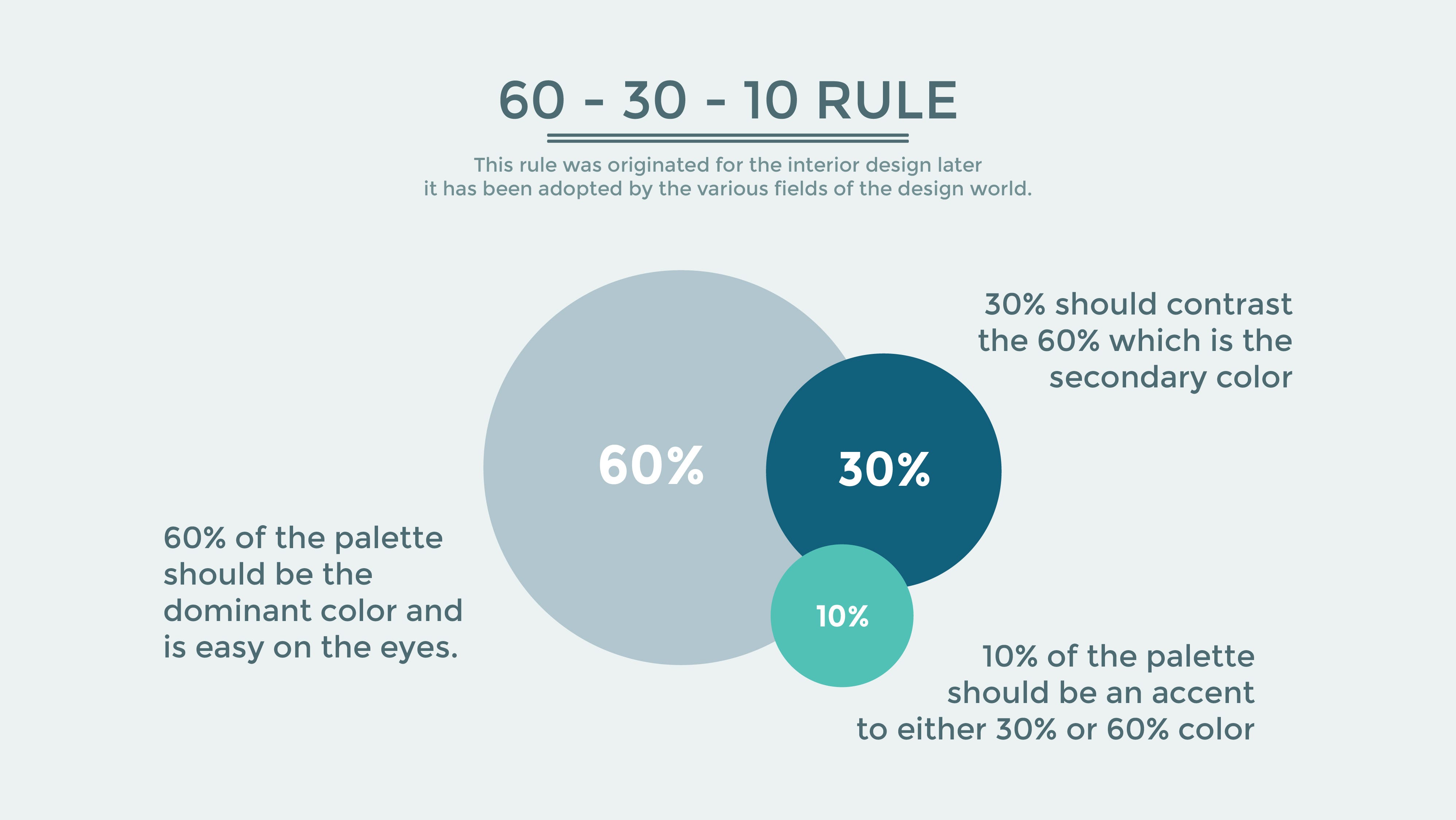
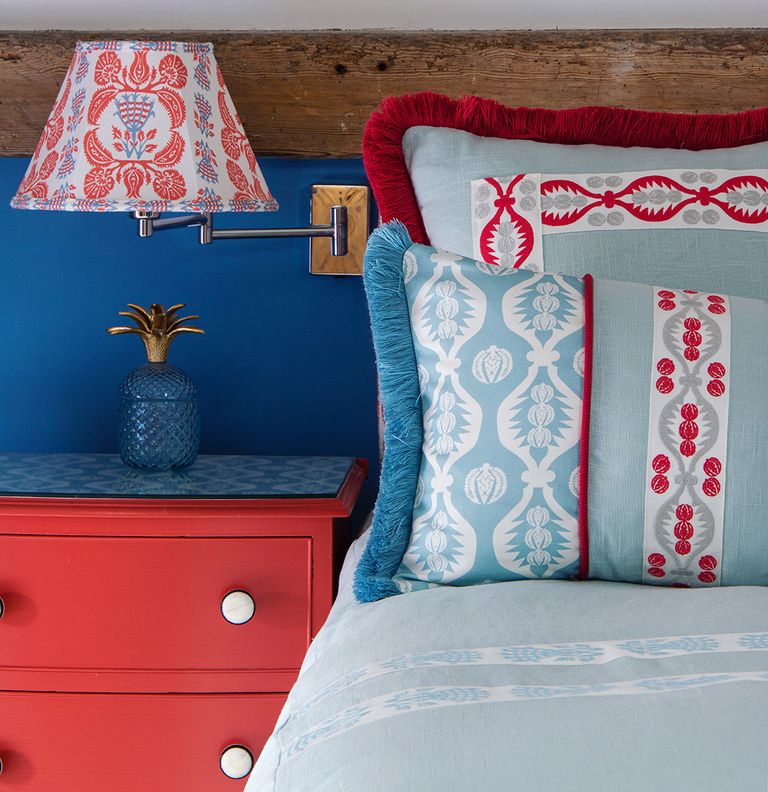
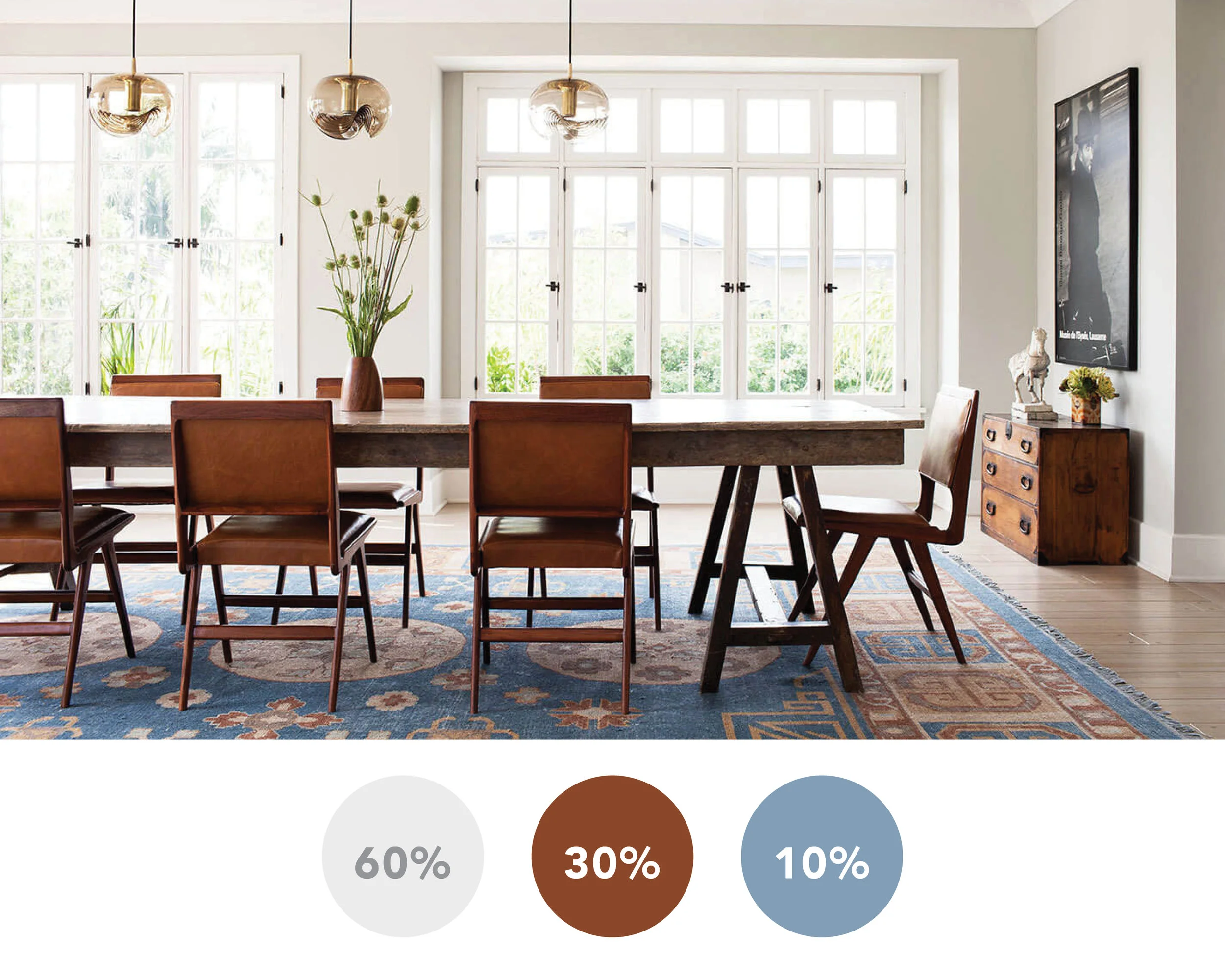
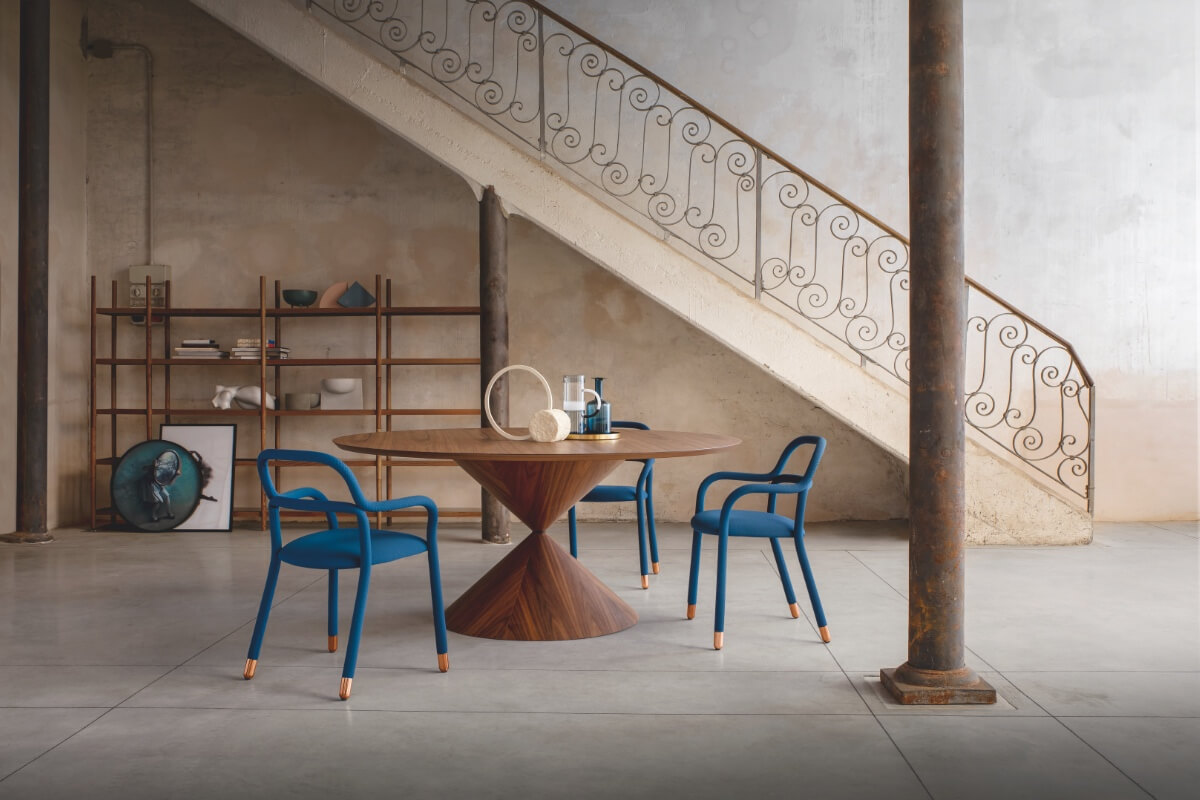
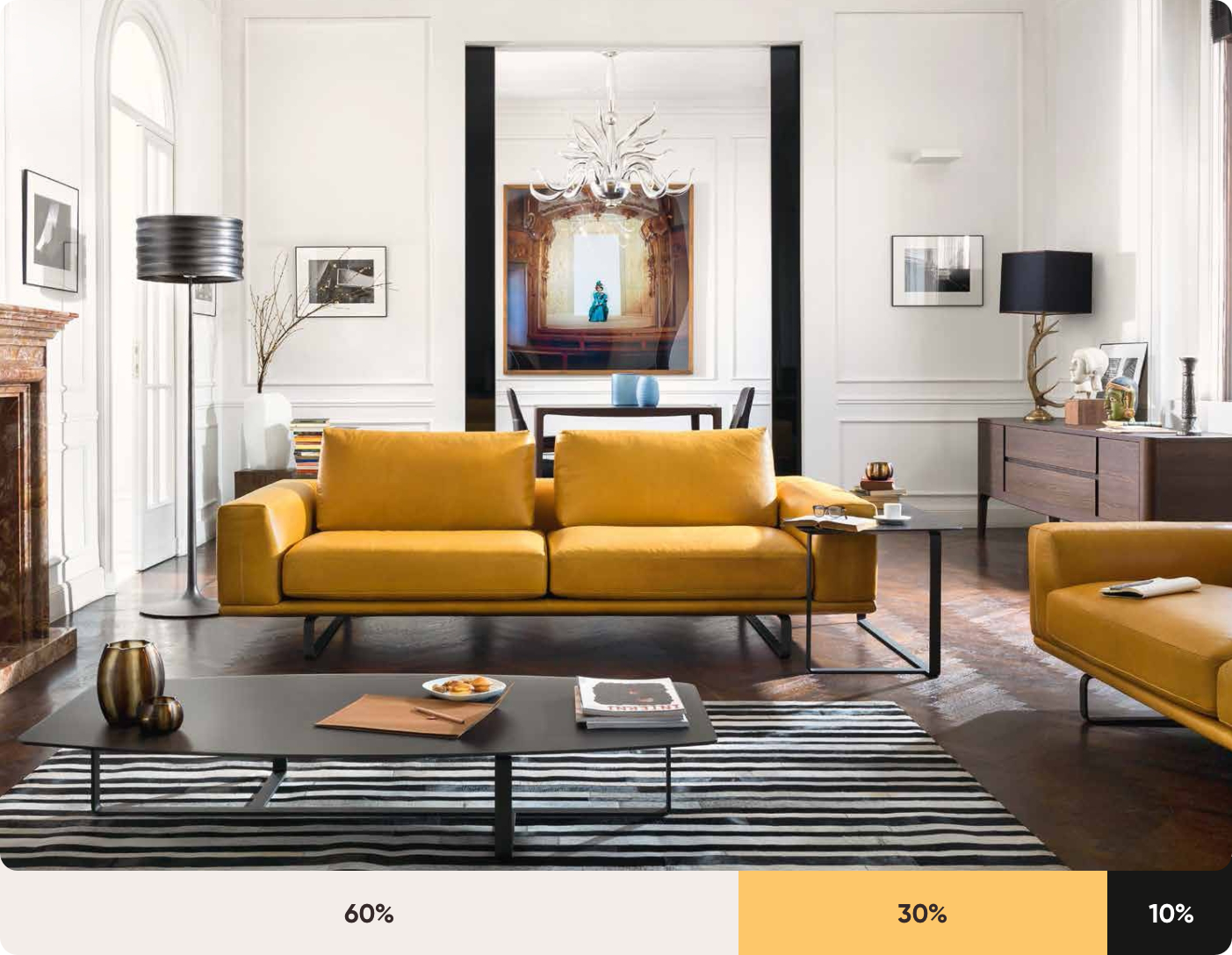
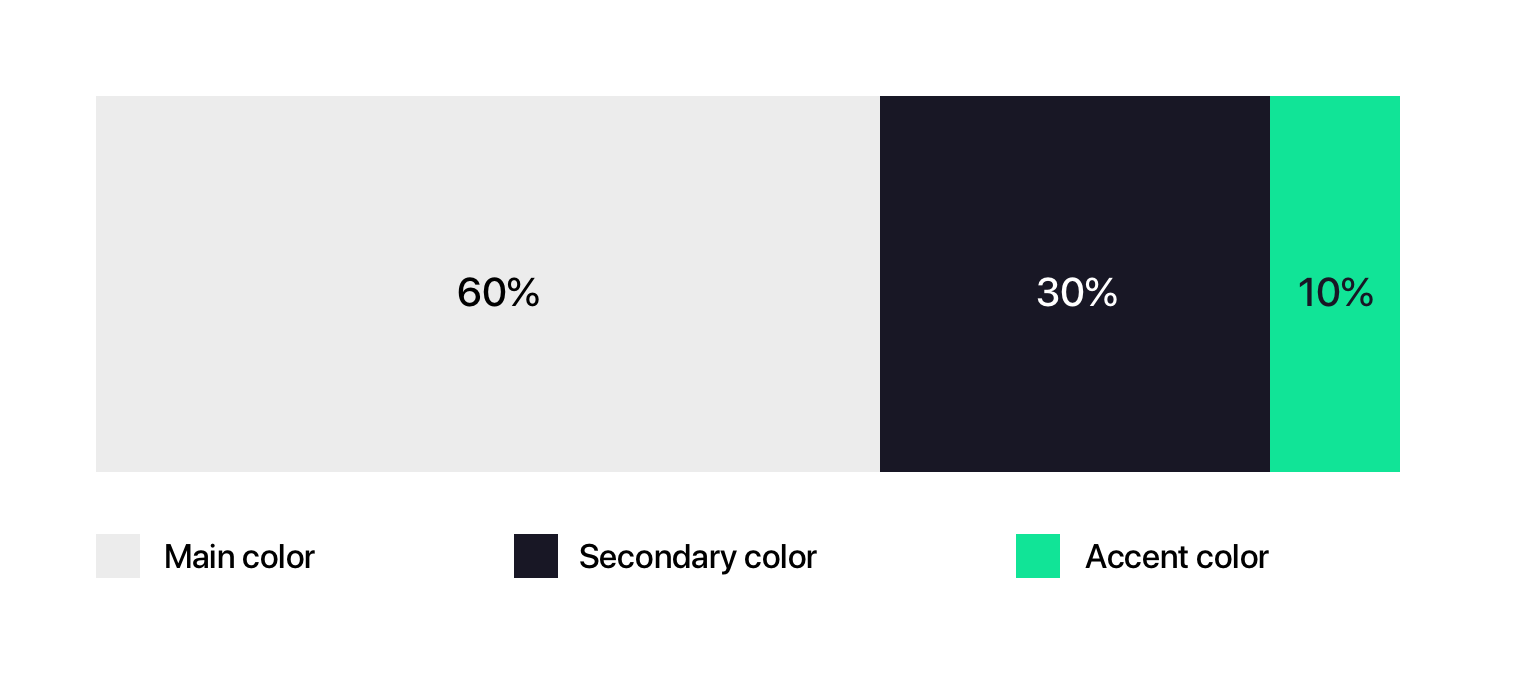
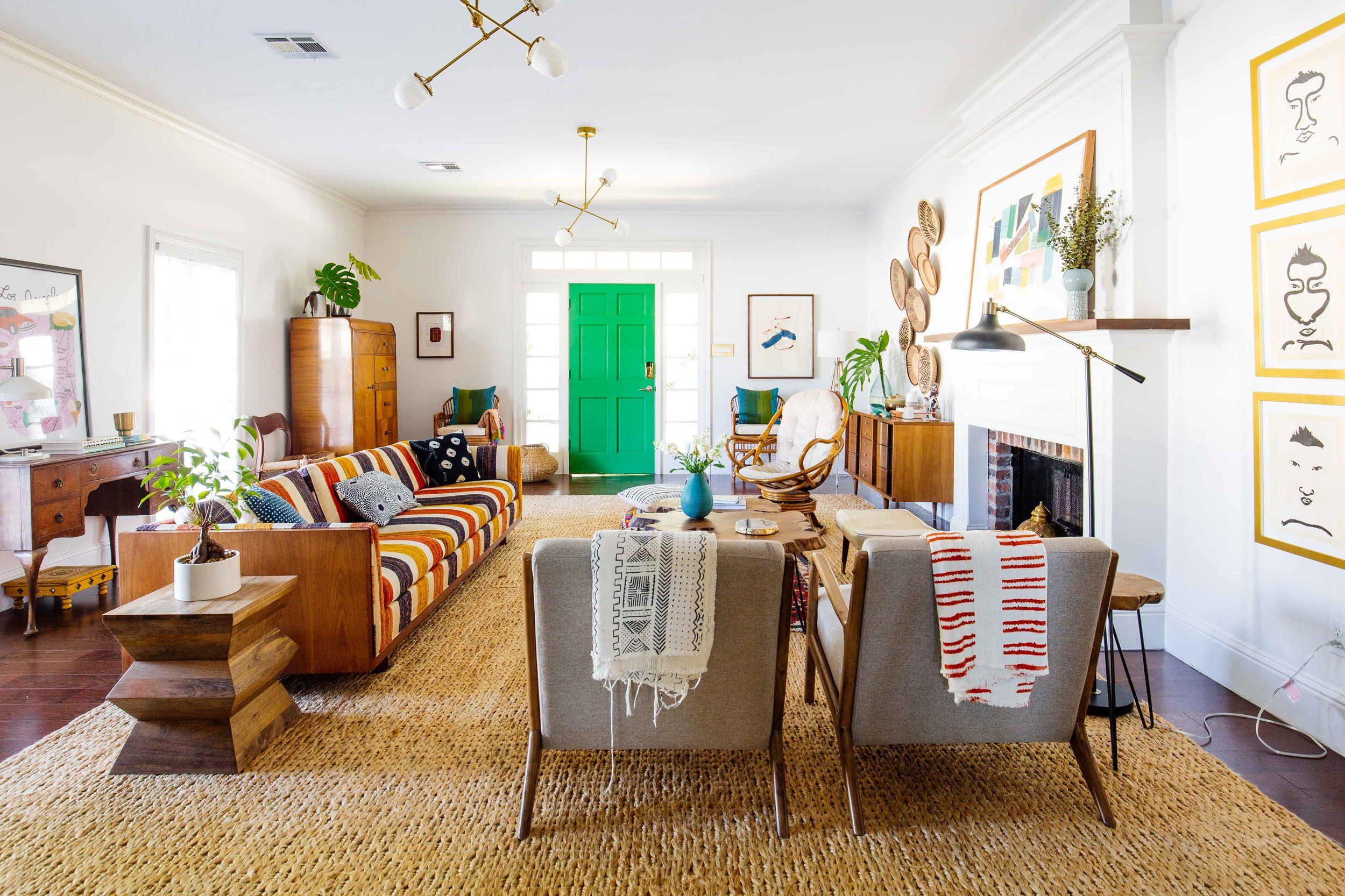
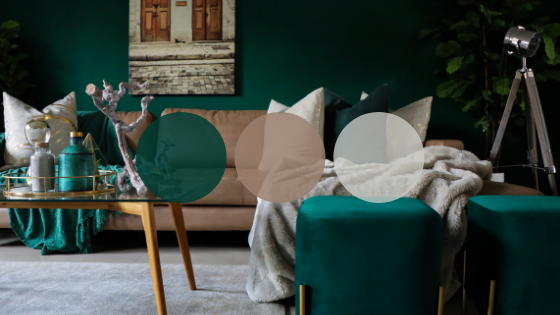
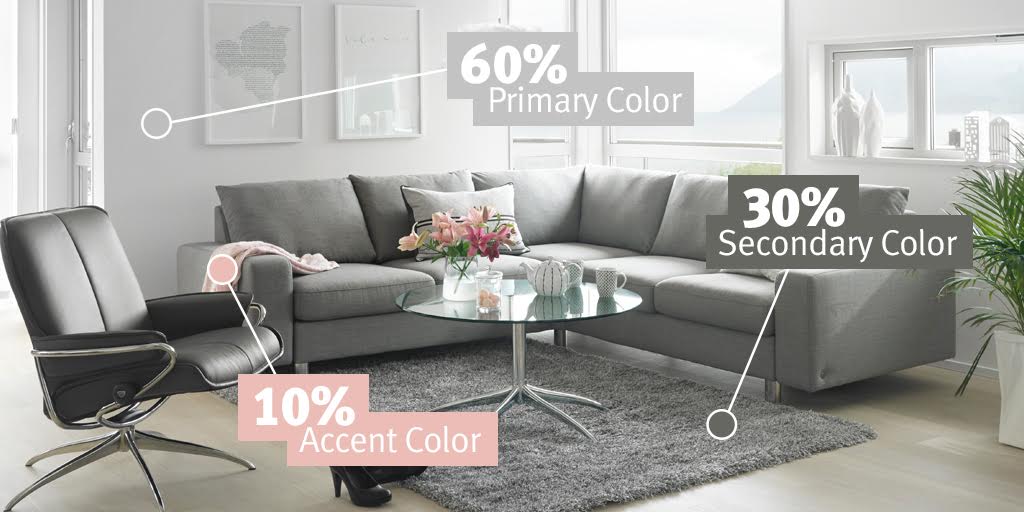
The rule states that for the most balanced, appealing look, you should choose a threecolor palette for decorating a room, and use it as follows Decorate 60% of the room with the dominant color Decorate 30% of the room with the secondary color Use the remaining color as an accent in 10% of the space. Employ the rule This interior design guideline dictates that you should devote 60 percent of a room's color to a dominant hue, 30 percent to a secondary hue, and 10 percent to an accent color This guideline helps maintain visual balance and keeps you from going overboard with bright accent colors or dull neutrals. The rule is an excellent rule of thumb for anyone who wants to take risks with colors but with confidence There are so many colors and combination options that creating a palette based on a scheme can facilitate the process and help you achieve the right results with minimum effort Image Albert Pinto Interior Design.
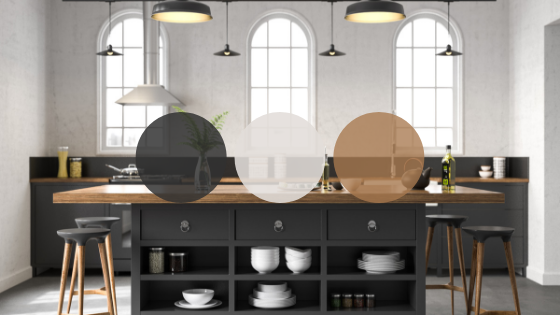
Now we want to talk about a very important rule of color and design which can effect our way of using color in our designs Rule This rules asserts that the color palette and the color proportion we are using for our space should be divided as 60% of the dominant color, 30% of the secondary color and 10% of the accent color. 60–30–10 Rule This interior design rule is a timeless decorating technique that can help you put a color scheme together easily The 60% 30% 10% proportion is meant to give balance to the colors This formula works because it creates a sense of balance and allows the eye to move comfortably from one focal point to the next. Apr 26, 18 Explore Betsy Kersey's board "Color Rule", followed by 116 people on See more ideas about design, interior design, interior design tips.
One of the most significant house paint design ideas is the rule of designers Usually, they choose a 3color palette for a room makeover to create a balanced look Then you can achieve a cohesive look without being too matchymatchy 60% comes from the dominant wall color and big furniture pieces,. A design ‘rule of thumb’ to create a space that flows is to use the color rule This combination of colors creates rooms that are cohesive and visually interesting So how does the rule work?. Take a look at some rooms in magazines or in Designers' Portfolio You'll notice that the rooms you like the most are almost invariably divided into percentages of This is an old adage in interior design By adding a black element.
How do you know how much each color will take up in your room?. The rule is a breakdown of how much of each color, texture, or pattern you need in your chosen room You need 60% of your main color, 30% or your secondary color, and 10% of your accent color!. This formula works because it creates a sense of balance and allows the eye to move comfortably from one focal point to the next.
In a nutshell, the rule is a threecolor palette for a room that achieves a balanced look and feel It is not a precise formula that you must stick to, but simply an easytoapproach decorating guideline that designers often use. The 60% is the overall color of the room, the background color if you will. It's a triedandtrue formula from interior design experts 60 percent of the room should be a dominant color, 30 percent of the room should be a secondary color and 10 percent should be the accent color!.
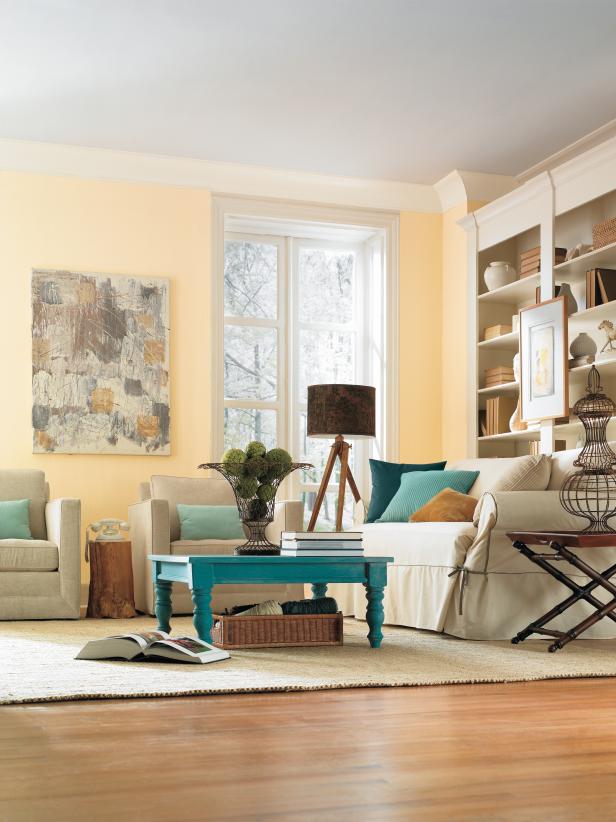
60% of a room can be filled with a dominant colour, 30% with a secondary colour, and 10% with one or two accent colours. The rule is an excellent rule of thumb for anyone who wants to take risks with colors but with confidence There are so many colors and combination options that creating a palette based on a scheme can facilitate the process and help you achieve the right results with minimum effort Image Albert Pinto Interior Design. The rule breaks down the percentages of each color that should be applied to the room in order to create a unified look Pick three colors—either complementary (colors that sit across from each other on the color wheel) or analogous (colors that sit next to each other on the color wheel)—and decide which would work as a dominant.
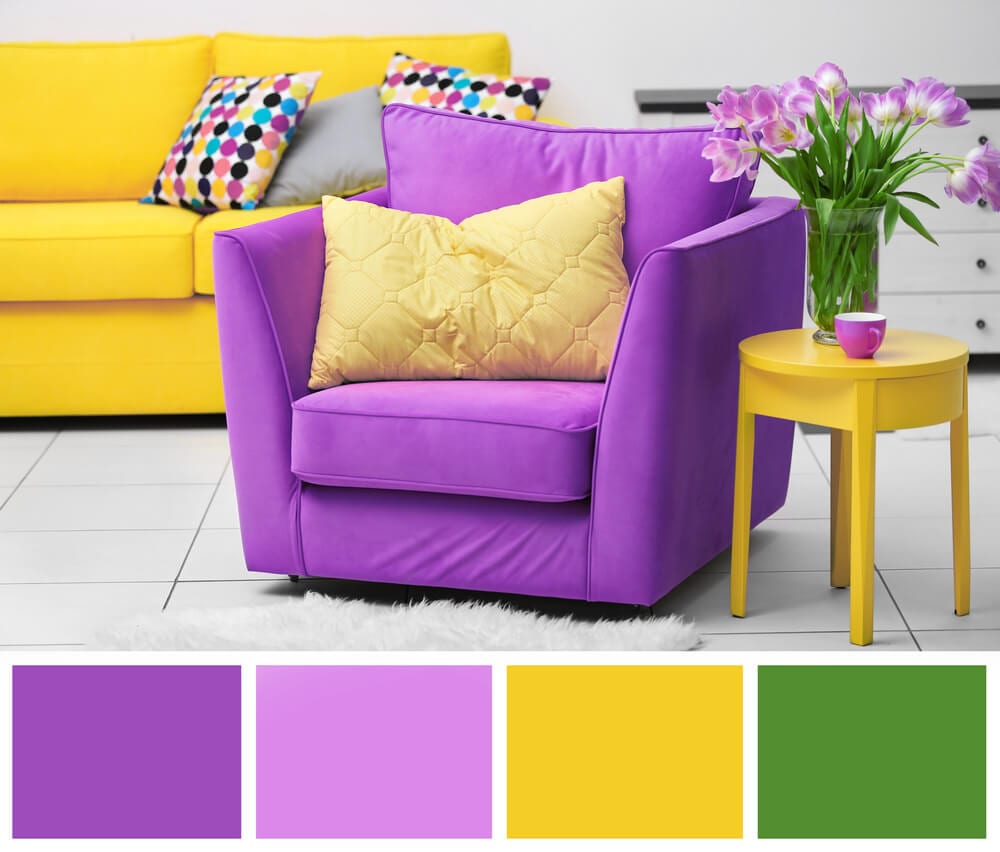
60% of a room can be filled with a dominant colour, 30% with a secondary colour, and 10% with one or two accent colours. An interior designer can help you designate which areas or furniture you’ll need to achieve this golden rule In general, it’s fairly easy to remember. According to the rule, you should only use three colors in any room – although you can successfully incorporate many different tones of these three colors This threecolor rule will allow you to create a balanced, restfullooking color scheme that's difficult to go wrong with.
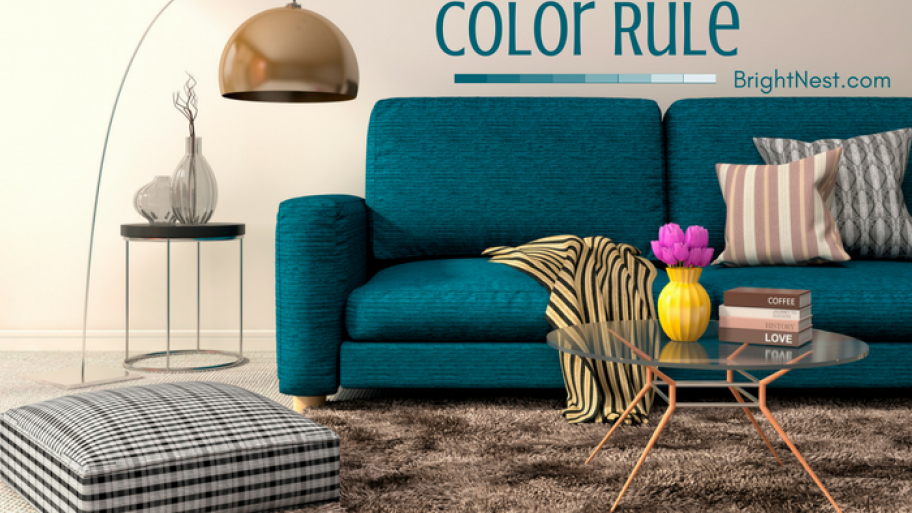
Using the 60–30–10 rule in interior decoration The rule of max 3 colors “Do not wear more than three colors in an outfit otherwise you’ll look like a clown or a parrot” — this is common advice that personal stylists give to their clients Unless you’re an expert in combining colors, it’s better to limit the total number of colors you use in your design. A design ‘rule of thumb’ to create a space that flows is to use the color rule This combination of colors creates rooms that are cohesive and visually interesting So how does the rule work?. The Color Rule The rule is a basic and timeless interior design rule that states that 60% of the room should be a dominant color, 30% should be a secondary color (or pattern/texture) and 10% should be an accent It’s a rule that when followed brings balance to the colors used in a space.
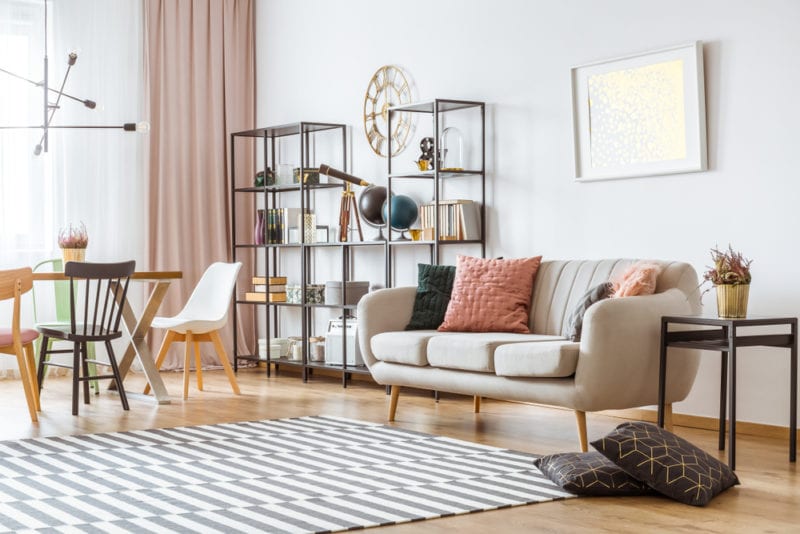
Basically colours should be used in the following proportions 60% of the room space should be in the dominant color – which basically means the walls and floor of the room 30% should be the secondary colour – this would be the furnishings. The rule is a guide that is used to blend colors in harmonic proportions when decorating For this, three colors are selected, which will be most prominent to varying degrees in the room The dominant color will be that, which used in 60% space The secondary tone will be twice as low 30%. One of the most significant house paint design ideas is the rule of designers Usually, they choose a 3color palette for a room makeover to create a balanced look Then you can achieve a cohesive look without being too matchymatchy 60% comes from the dominant wall color and big furniture pieces,.
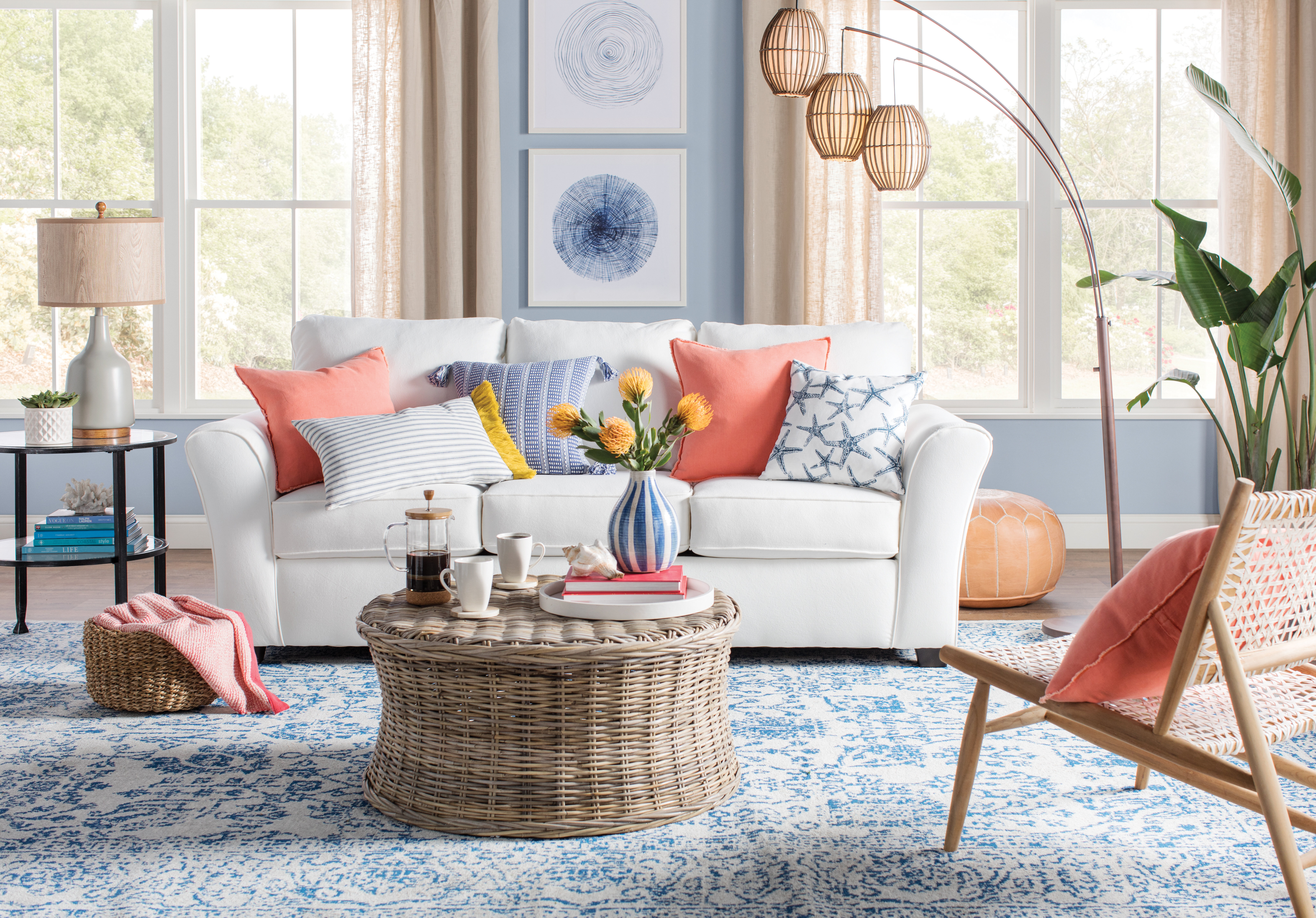
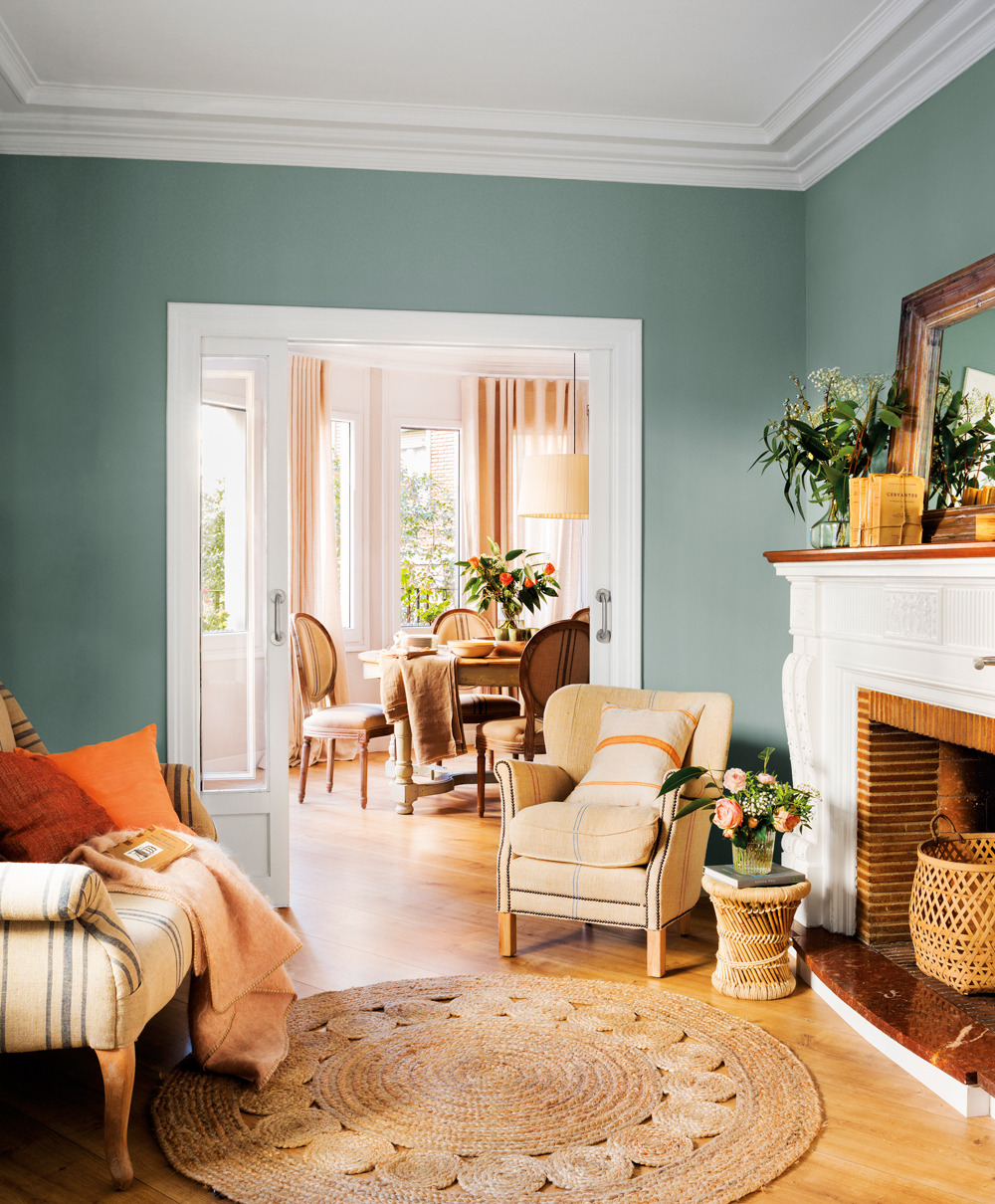
The rule is a design strategy that involves three color ratios Essentially, 60 percent of your room is dominated by one neutral color, 30 percent goes to your secondary color and, finally, 10 percent goes to your accent colors Here’s the most common way to use the rule 60% – paint or wallpaper. Colors are the thing that gives your space dimension, and also determines the visual size of a room This means that they can both enlarge a room and make it look more spacious, or downsize it This guide will help you pick the most flattering colors for your home with the Rule In Interior Design. It states that 60% of the room should be a dominant color, 30% should be the secondary color or texture and the last 10% should be an accent How to Use the Rule?.
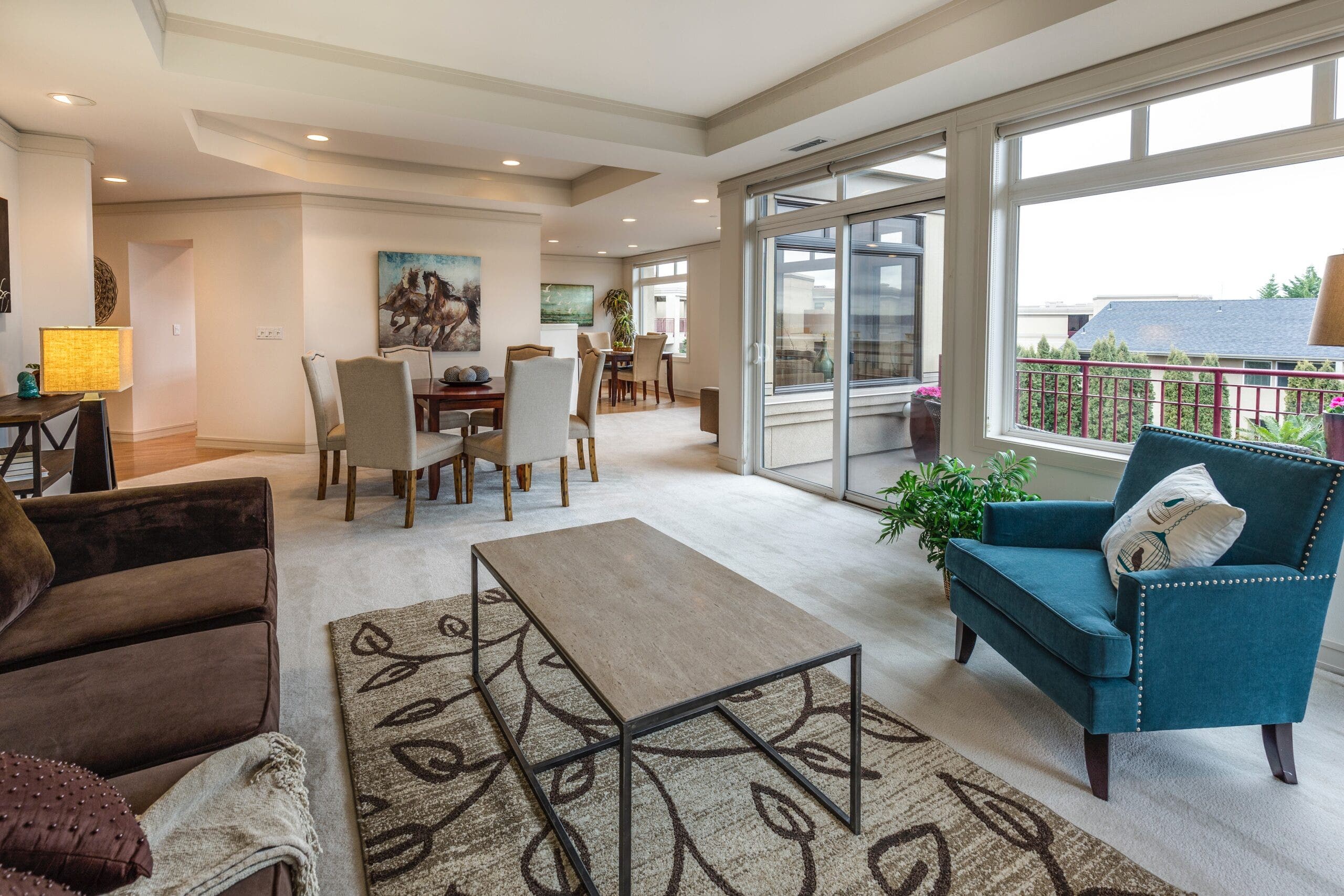
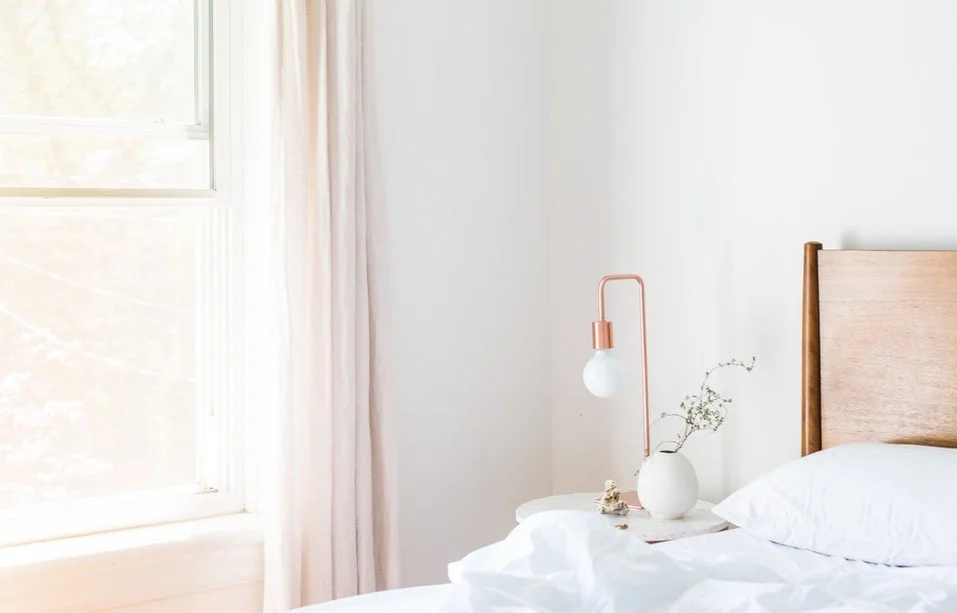
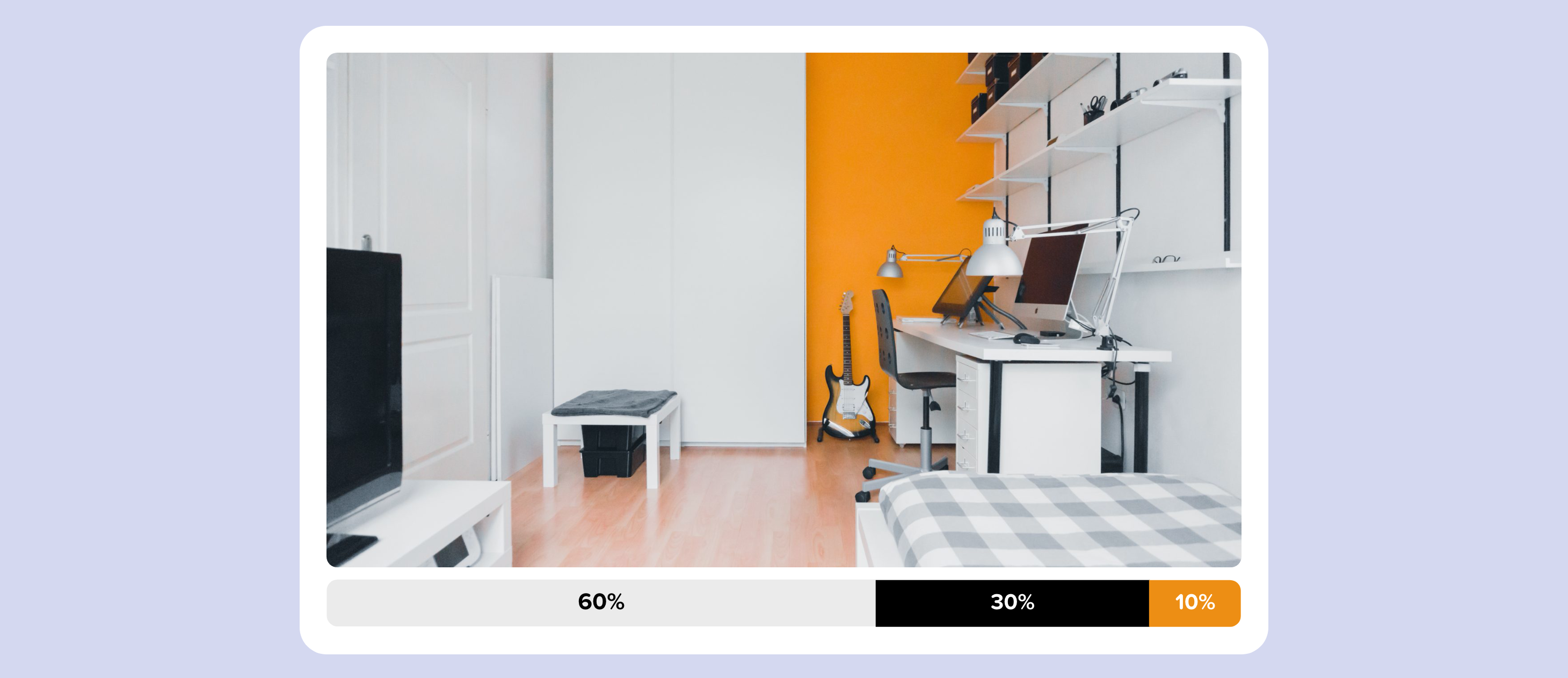
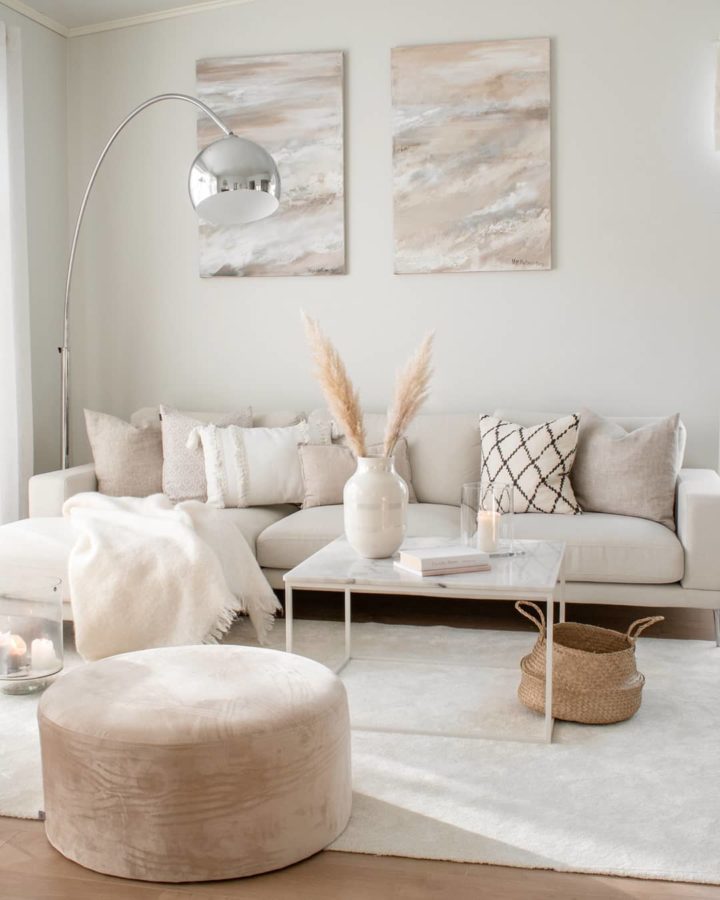
Let’s walk through an easy example of using the color rule in a bedroom In this case, you can see that the dominant color of the room is white The walls, doors, floor, and much of the bedding are all white White clearly occupies at least 60% of this room. So why not take a tip from professional interior designers and use the decorating rule?. So why not take a tip from professional interior designers and use the decorating rule?.
The reason we like a 60/40 ratio is because it’s not a perfect split If you add a third object and do 16 across the board, you are going to have 2 objects with the same height variance ratio dampening the asymmetry effect 60/30/10 creates a nice variety of proportions (declining ratio), instead of 1 uniform proportion (fixed ratio). 60% Is The Main Color Choose the main color, which will take at least half of the interior decor The easiest way is to use the main color on the walls It is better if it is neutral, so as not to make a mistake However, if you feel like bright colors – use them but keep all the rest in neutral tones. Remember – 60% – the main color for space – 30% – a secondary color – 10% – an accent color You can also create an alluring decor collection with three pieces in different shapesWhen it comes to your interior design, the rule of three applies to many elements of it Think accent pillows you put on your bed or chairs.
Apr 26, 18 Explore Betsy Kersey's board "Color Rule", followed by 116 people on See more ideas about design, interior design, interior design tips. The Color Rule The rule is a basic and timeless interior design rule that states that 60% of the room should be a dominant color, 30% should be a secondary color (or pattern/texture) and 10% should be an accent It’s a rule that when followed brings balance to the colors used in a space. The rule is indicating the amount of color you should use in your color pallet 60% of your design should have your primary color, 30% of parts should have another complementary color, and the rest 10% should be in the accent color This rule can easily make your design well balanced and appealing.
The 60/30/10 Rule Of Interior Design 19th October by abbyreilly in Trends, Help and Advice If you're just starting out in designing the interior of your home, the 60/30/10 rule of colour is a great foundation for your decorating inspiration. Employ the rule This interior design guideline dictates that you should devote 60 percent of a room's color to a dominant hue, 30 percent to a secondary hue, and 10 percent to an accent color This guideline helps maintain visual balance and keeps you from going overboard with bright accent colors or dull neutrals. Mar 8, 14 Explore Iris Li's board "DECOR Rule", followed by 607 people on See more ideas about decor, design, interior design.
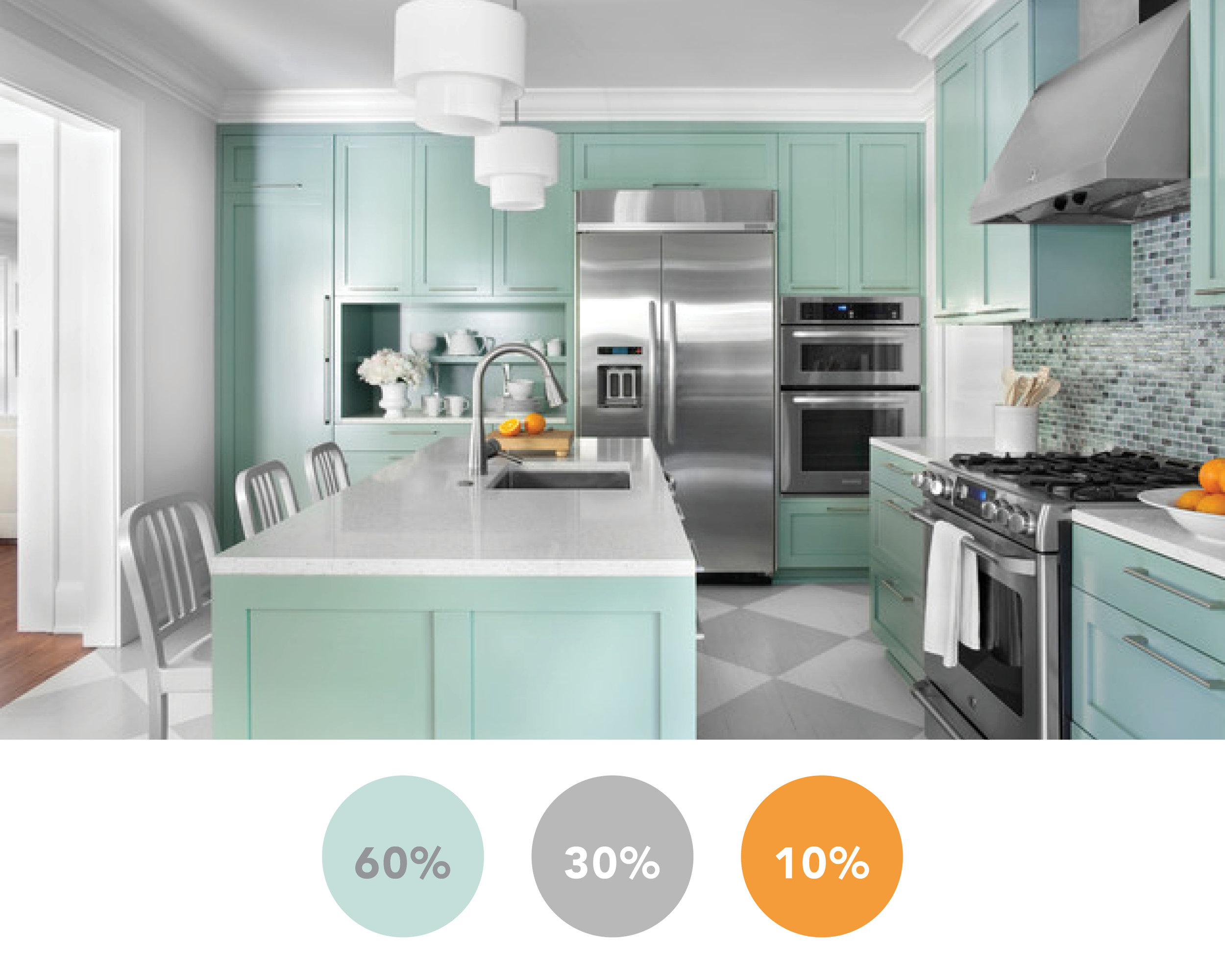
The rule can be very helpful if you’re nervous about making bolder color choices or worried that a dramatic wall color may swallow a room In this case, Hayley has created a bright and colorful kitchen that isn’t sensory overload The breakdown 60% is Benjamin Moore Southfield Green 30% is bright white. The rule is based on the rule of three, a simple premise that’s used in a variety of creative pursuits — everything from telling jokes to arranging flowersIn design, it refers to the selection of three color families to serve as the palette for a room. Or if you’re working with three things, like three colors in a room, for example, the 60/30/10 rule means you want one to be 60 percent of the whole, one to be 30 percent of the whole, and one to be 10 percent of the whole For an interior design color scheme, this means 60 percent of your room should be one color, 30 percent a second color.
The rule in interior designing helps us greatly in deciding the color scheme and it’s distribution Top Interior designers in Delhi, NCR generally use the rule to designate a percentage of the overall color scheme – this implies that one color is 60%, the second is 30% while the third is 10%. Use the Rule Decorating a space in terms of color is as easy as Don't believe me?. The rule The rule is any interior design fan’s best friend No matter what your personal aesthetic may be or what you want your room to look like, you can use this rule to help make sure that your color palette stays balanced In this setup, you’ll use three colors 60, 30 and 10 refer to the percentages of your design.
The rule The rule is any interior design fan’s best friend No matter what your personal aesthetic may be or what you want your room to look like, you can use this rule to help make sure that your color palette stays balanced In this setup, you’ll use three colors 60, 30 and 10 refer to the percentages of your design. The rule is simply a guideline to help you create the perfect color combinations David Harris, Design Director at Andrew Martin , shares his top tips on applying the design rule. OldSchool Rule Follow the guide for color The rule refers to using your main, focal color in 60 percent of your space (on the walls, in big pieces of furniture, in the rug), a.
Is a timeless decorating rule that can help you put a color scheme together easily The 60 percent 30 percent 10 percent proportion is meant to give balance to the colors used in any space This concept is incredibly simple to use Here’s How to Use the Rule. Design 101 Color Theory 101 Analogous, Complementary and the Rule Interior designers and color experts share tips for harnessing the transformative power of paint to create interiors that are balanced, sophisticated and livable. DeAnna suggests following a color principal commonly referred to as the " rule" For example, 60 percent of a bathroom or kitchen, typically the walls, should be one color of a color scheme The color of the cabinetry and/or furniture accounts for the 30percent figure.
The rule is indicating the amount of color you should use in your color pallet 60% of your design should have your primary color, 30% of parts should have another complementary color, and the rest 10% should be in the accent color This rule can easily make your design well balanced and appealing.
3
A Guide To Choosing Colors For Your Brand By Sachpreet Kaur Medium

Tips On Using Colors In Ui Design Ui Place
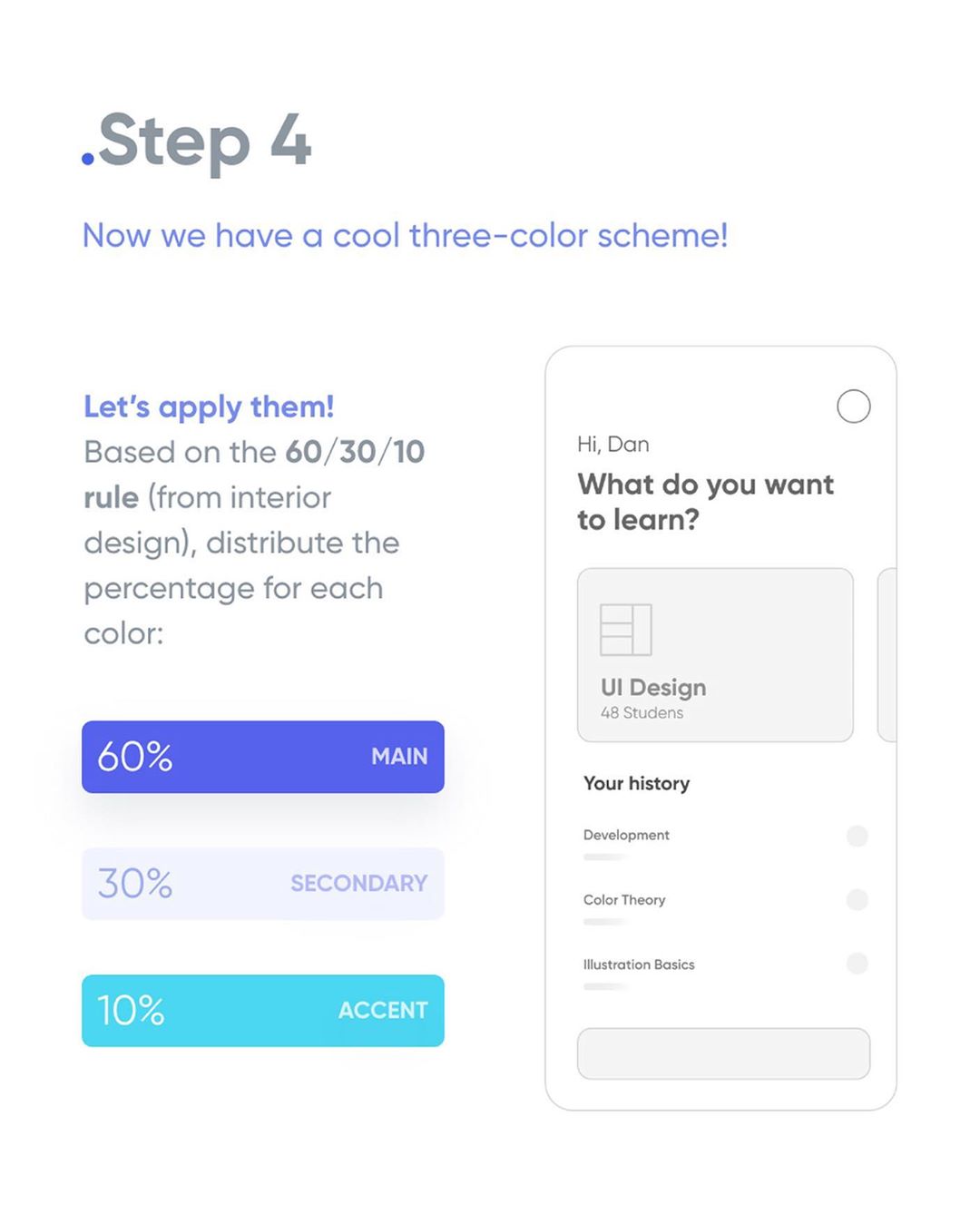
How To Create Color Schemes For Your Ui Design Using The 60 30 10 Technique
Helis Yapi A S The 60 30 10 Space Building Rule

Design The Interior Of A Home Westport Monroe New Canaan Ct Regal Line Painting
60 30 10 Rule What It Is And How To Include It In Interior Design Homes Gardens
What To Know About The 60 30 10 Colour Rule Pilon Real Estate Group
What Is The 60 30 10 Color Rule You Have To Try This In Your Home

These Are A Few Of My Favorite Things 47 60 30 10 Color Design Rule Design Rules Design Theory Color
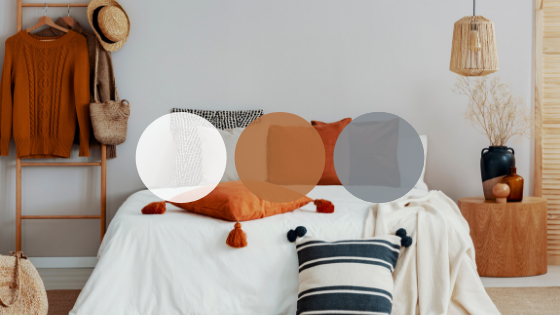
Interior Design Color Theory Everything You Need To Know About The 60 30 10 Rule First Heritage Mortgage

How To Choose The Perfect Interior Color Scheme The Best Pro Tips Part Ii Design Blog Oli Interior Desig Interior Color Schemes Interior Design Interior
Q Tbn And9gcqartqwxnaz Di Thbvkmyaru92lr42hgehffvpziw Vyewsiyj Usqp Cau
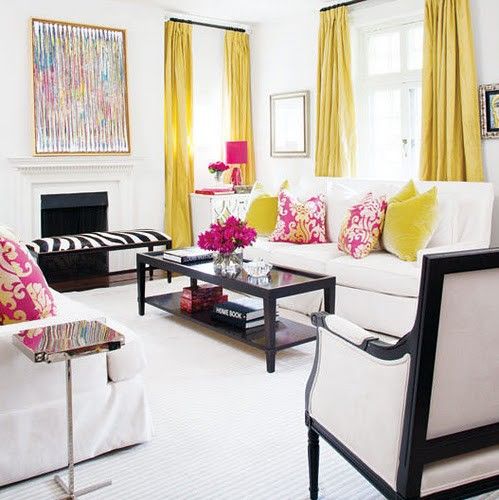
60 30 10 Rule In Home Decor 25 Ideas Digsdigs
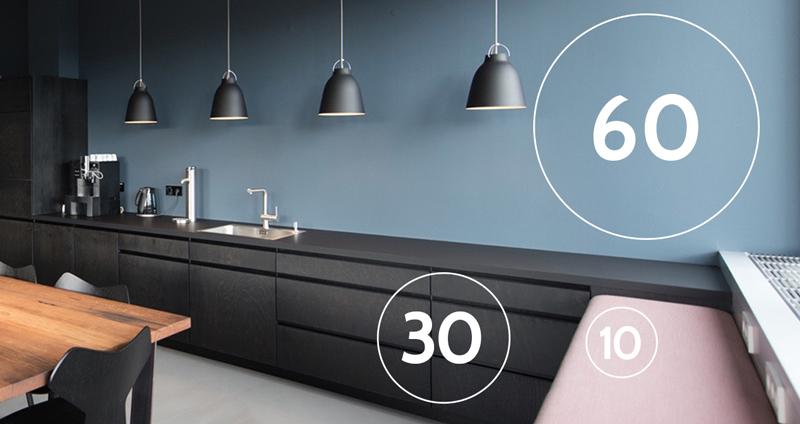
60 30 10 Rule Diamond Vogel

Color Your Room With Confidence The 60 30 10 Rule The Fairmount Flat
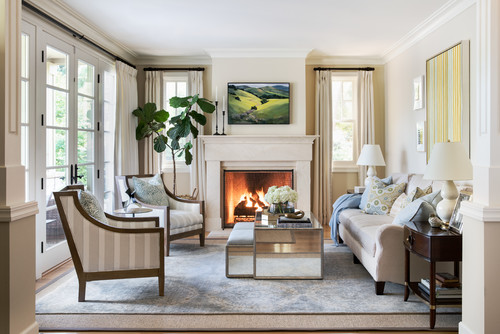
Color Us Intrigued 10 Tips Tricks And Facts About Paint Realtor Com

Borrow The 60 30 10 Rule Of Interior Designers For Your Diy Painting Room Painting Color Tips And Tricks
Color Your Room With Confidence The 60 30 10 Rule The Fairmount Flat
These Are The 4 Color Rules That Every Interior Design Fan Needs To Know

How To Match Colors In Interior Design Lovetoknow

Interior Balancing Your Color Scheme With The 60 30 10 Rule Living Space Decor Living Room Orange Luxury Modern Furniture
Color Palette Ideas For Living Rooms Bedrooms More Wayfair
Color Theory 101 Analogous Complementary And The 60 30 10 Rule Hgtv

Balancing Your Colour Scheme With The 60 30 10 Rule Smartstyle Interiors
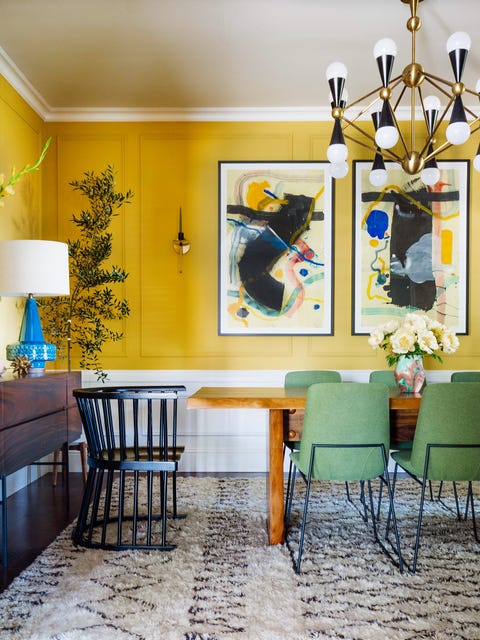
Outdated Design Rules You Shouldn T Follow Designer Approved Rules
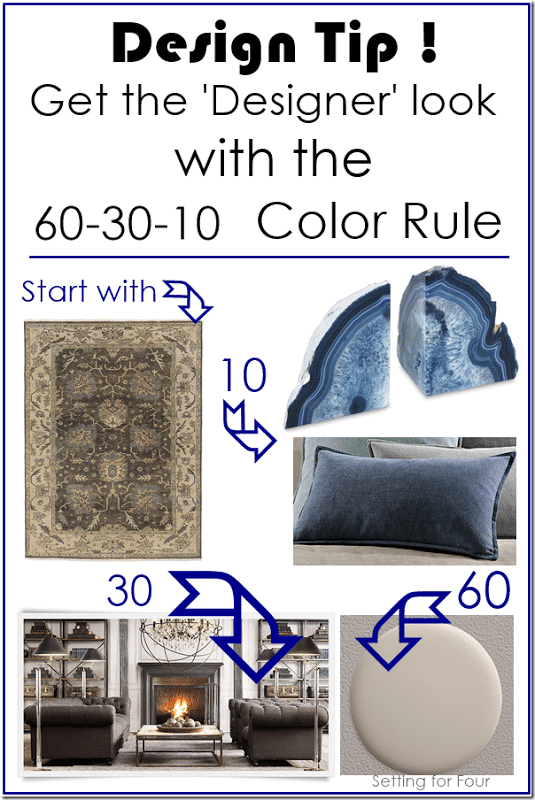
Design Tip The 60 30 10 Color Rule Setting For Four
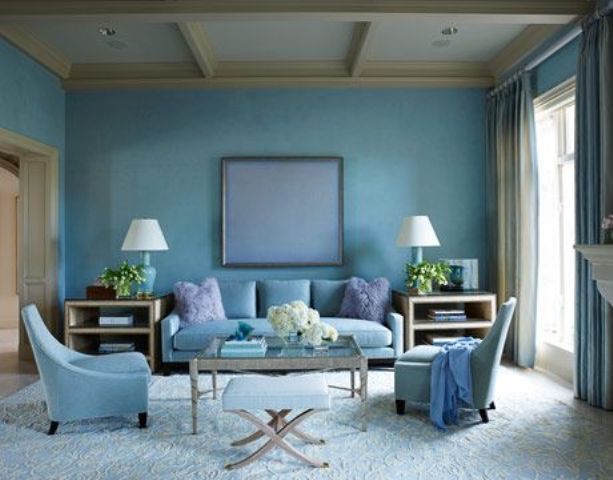
60 30 10 Rule In Home Decor 25 Ideas Digsdigs

How To Add Colour In Interior Design Decorating With Fabrics

Douglas Son At Home Spring 18 By At Home Magazine Issuu

Choosing Colors Part 2 The Interior Design Rule Five Star Painting Of Loudoun
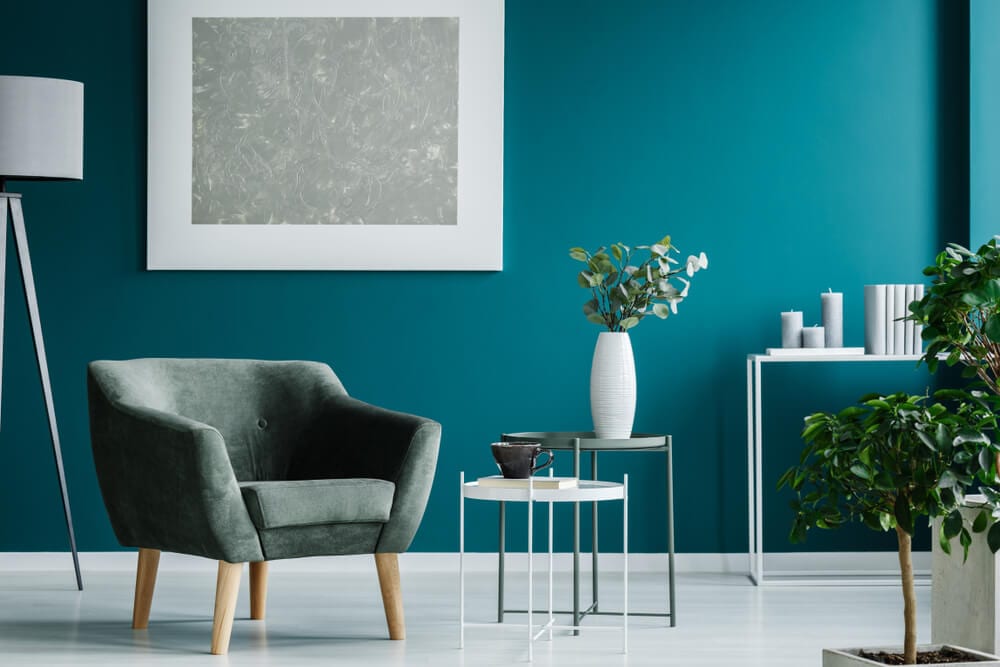
These Are The 4 Color Rules That Every Interior Design Fan Needs To Know
Q Tbn And9gcqartqwxnaz Di Thbvkmyaru92lr42hgehffvpziw Vyewsiyj Usqp Cau

Design The Interior Of A Home Westport Monroe New Canaan Ct Regal Line Painting

The 60 30 10 Color Rule Confettistyle

Adding Color 60 30 10 Rule Armstrong Painting Roofing And Windows

How To Add Colour In Interior Design Decorating With Fabrics
How To Use Color In Interior Design Don T Miss Our 4 Rules Midj In Italy

The 60 30 10 Color Rule In Interior Decotation Bambubuild

60 30 10 Rule In Interior Design Decor Usage Elements Natty Decor

The Colour Rule 60 30 10 Royal Blue Dwell Living Interiors Facebook

Handpicked Tips And Tricks For Interior Design Projects Black Panther
Interior Design Color Theory Everything You Need To Know About The 60 30 10 Rule First Heritage Mortgage

What Is The 60 30 10 Color Rule You Have To Try This In Your Home
:max_bytes(150000):strip_icc()/Armchairsinelegantwhitelivingroom-5a1650a1b39d030039b8fff0.jpg)
How To Use The 60 30 10 Color Rule In Your Home

What Is The 60 30 10 Color Rule You Have To Try This In Your Home
How To Use Colors In Ui Design Practical Tips And Tools By Wojciech Zielinski Prototypr
How Can You Coordinate Colors In A Room Beasley Henley Interior Design Naples Fl Winter Park Fl
/yellow-bedroom-58a6b9c05f9b58a3c9d90ae1.jpg)
The 60 30 10 Color Rule
These Are The 4 Color Rules That Every Interior Design Fan Needs To Know
How To Use Colors In Ui Design Practical Tips And Tools By Wojciech Zielinski Prototypr

Color Your Room With Confidence The 60 30 10 Rule The Fairmount Flat

Choosing A Color Scheme 60 30 10 Rule Elephantstock

60 30 10 Rule Affordable Interior Design Design Rules Interior Design School
10 Principles For Color Usage In Ui Design By Danny Sapio Ux Collective

4 Simple Color Rules You Need To Know Blog About Interior Design

The Key To Color Confidence The 60 30 10 Rule Apartment Therapy

For Interior Design Color How To Use Color Make Your Vintage Home Reflect Its History Design Stack A Blog About Art And Architecture Interior 7 Decorating Rules Ignore The Key

The Role Of Color In Ux Toptal

When Working With A Palette Of Paint Use The 60 30 10 Rule For Walls Furniture And Decor Decorating Rules Interior Design Guide Design Rules

The Dos Donts Of Color Combos

These Are A Few Of My Favorite Things 47 60 30 10 Color Design Rule Robyn Spady S Blog
All You Need To Know About Colors In Ui Design Theory Practice By Christian Vizcarra Ux Collective
Outdated Design Rules You Shouldn T Follow Designer Approved Rules

7 Quick Tips In Picking The Perfect Color Combination For Your Infographics

Color Theory 101 Analogous Complementary And The 60 30 10 Rule Hgtv
Quick Design Tip 60 30 10 Color Rule Angie S List
Must Know Interior Design Rules To Memorize Before Changing Home

Design Your Dreams Deciding A Color Scheme 60 30 10 Rule

The Rule Of Three Welsh Design Studio
Mastering Colors In Ui Design Adding Colors To Your Design Can Be A By Kapil Moon Ux Collective
Ideal Organizing Design How To Pick Your Theme Color When Decorating
Interior Design Color Theory Everything You Need To Know About The 60 30 10 Rule First Heritage Mortgage
:max_bytes(150000):strip_icc()/sixtyrule_LR_getty-56a192703df78cf7726c19e2.jpg)
How To Use The 60 30 10 Color Rule In Your Home

Homescapes Guide To The 60 30 10 Colour Design Rule

Inside Design Learn How To Mix Colours D Signers
6 Simple Tips On Using Color In Your Design By Nick Babich Ux Planet

Borrow The 60 30 10 Rule Of Interior Designers For Your Diy Painting Room Painting Color Tips And Tricks

The Dos Donts Of Color Combos

How To Pick A Color Scheme For Your House S Rooms
What Are The 3 Analogous Colors Decoholic

Inside Design Learn How To Mix Colours D Signers
Ekornes Stressless When Decorating Your Home It S Important To Remember The 60 30 10 Rule Nationaldecoratingmonth
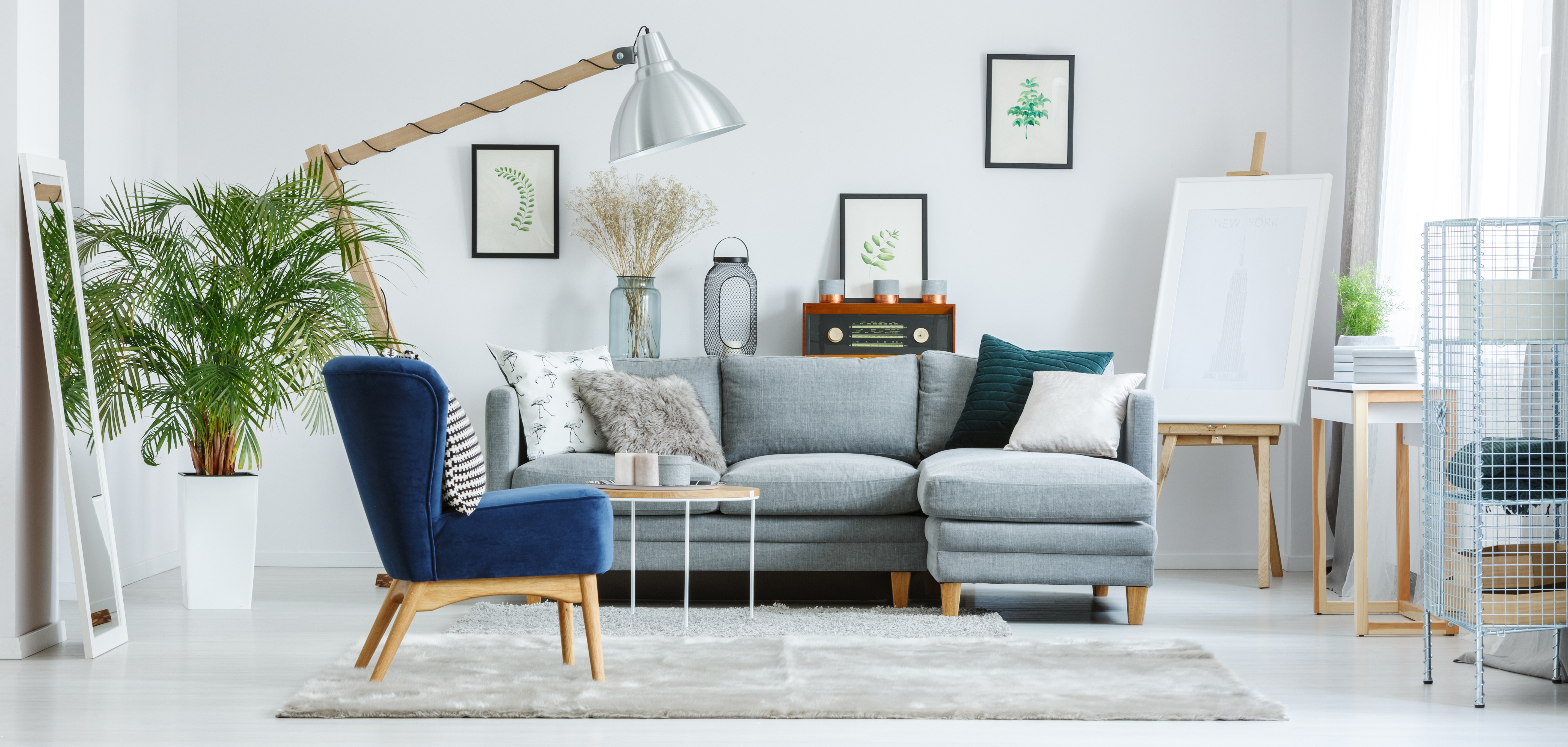
How To Overcome The Fear Of Adding Color To Your Home

House Paint Design The 60 30 10 Rule Of Interior Designers Myboysen

The 60 30 10 Color Rule In Interior Decotation Bamboo Architecture Decorating Rules Paint Color Inspiration Interior Design Guide

60 30 10 Rule In Interior Design Decor Usage Elements Natty Decor

The 60 30 10 Rule Of Interior Design Walls And Floors

Passonno Paints Decorating Made Simple Interior Design Classes Design Decor
Q Tbn And9gcqc6jqa1wgoswqzidnoovuqr7optr4vtqxwfayx2knktw R4cz1 Usqp Cau
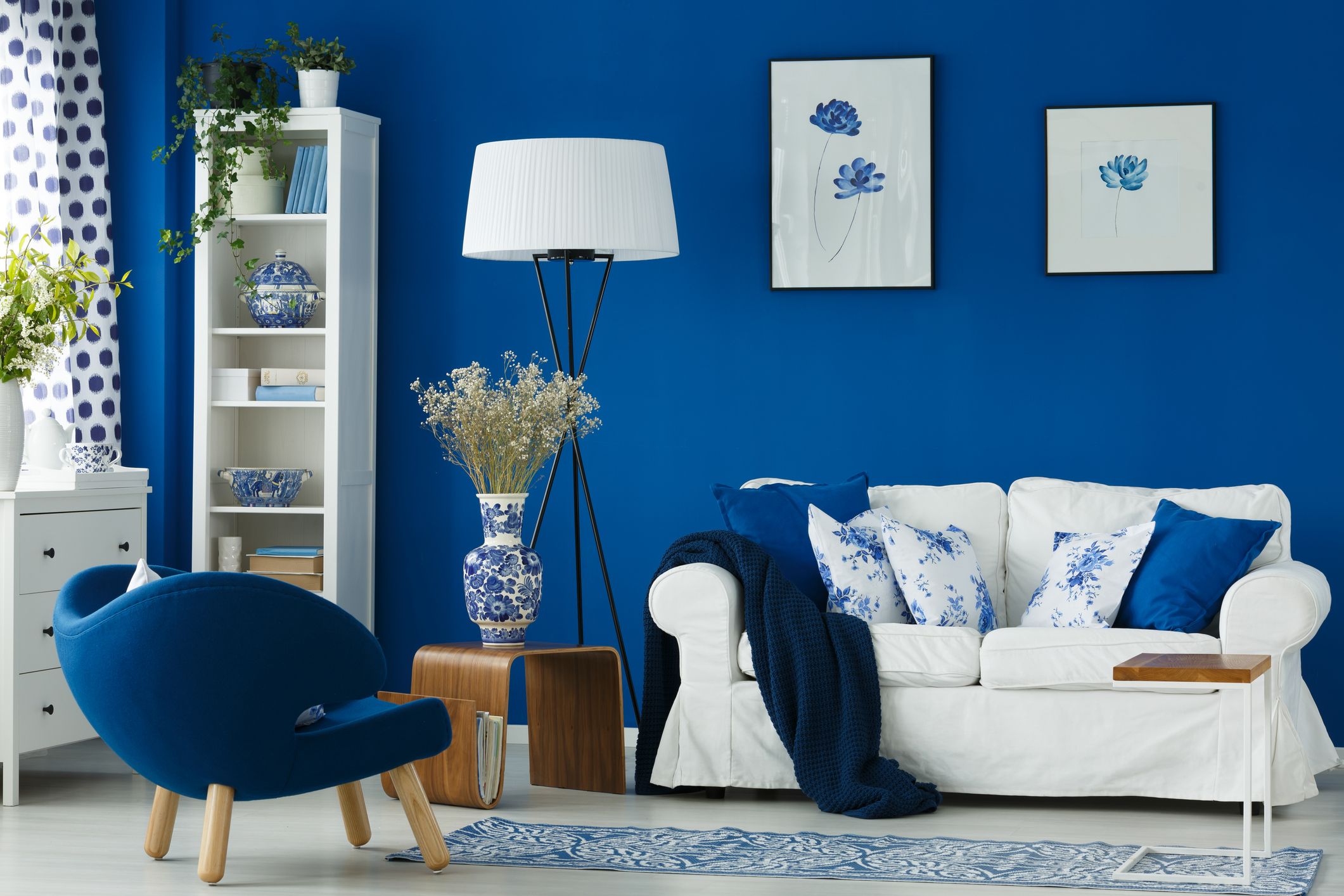
How To Match Colors In Interior Design Lovetoknow

How To Use Colors In Ui Design Practical Tips And Tools By Wojciech Zielinski Prototypr
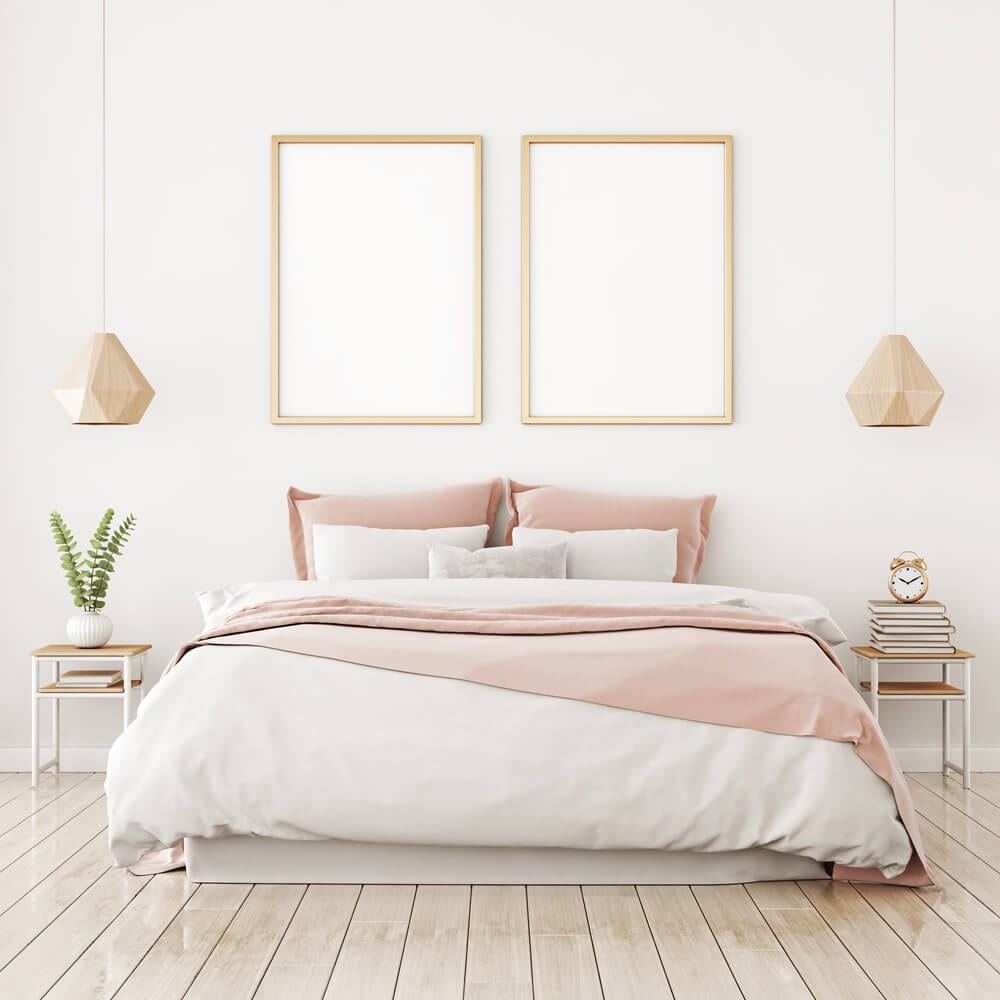
These Are The 4 Color Rules That Every Interior Design Fan Needs To Know

3 Powerful Interior Design Rules That Can Transform Your Home Sara Russell Interiors

Design Truffle
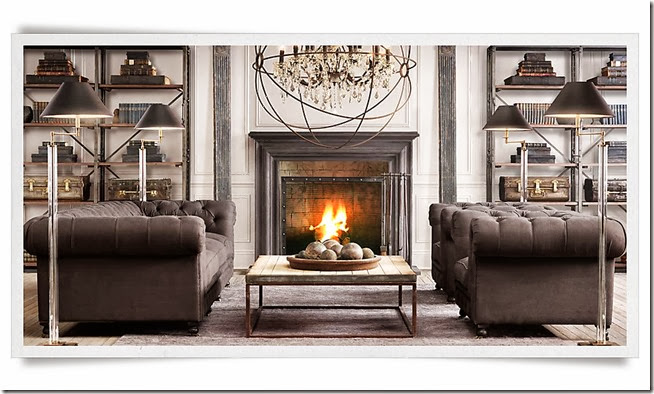
Design Tip The 60 30 10 Color Rule Setting For Four

How To Match Colors In Interior Design Lovetoknow
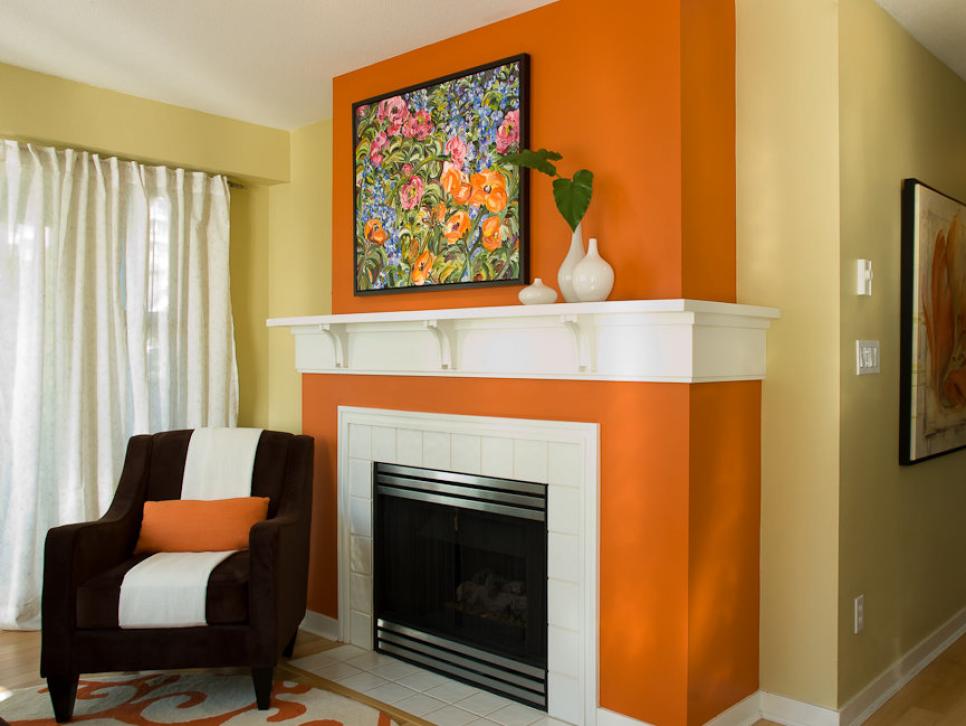
Color Theory 101 Analogous Complementary And The 60 30 10 Rule Hgtv


